You know the feeling.
That invisible wall.
The frustrating inertia that keeps you from starting, even when you know precisely what needs to be done.
It’s often labeled as procrastination, a simple lack of willpower, or laziness.
But what if it’s something deeper?
What if it’s a systemic issue, a fundamental failure in your internal operating system, leading to a debilitating ‘deadlock’?
The experience of constant low energy and the debilitating ‘start friction’ that precedes a task is not a moral failing; it is often a symptom of an underlying architectural problem.
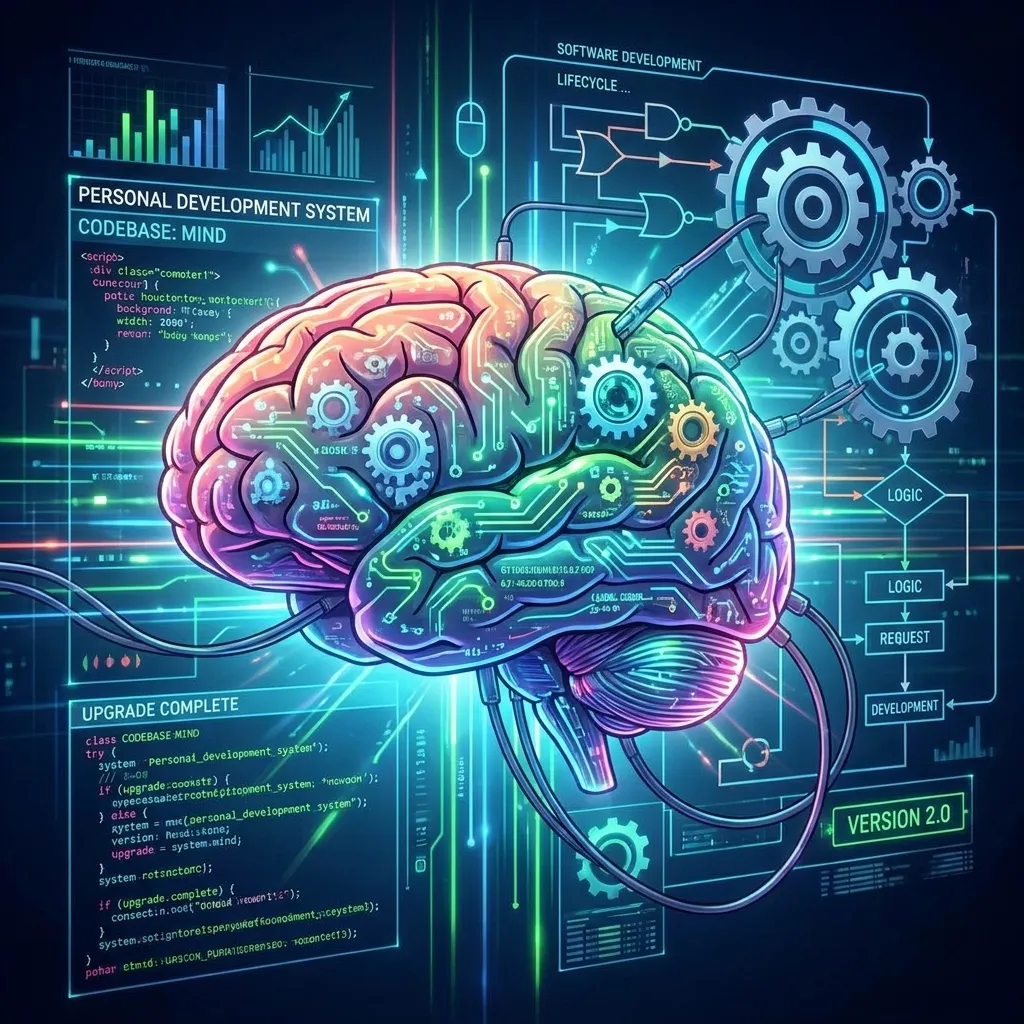
In the PDES framework, we perceive your reality as a modular system that can be modeled, designed, and optimized.
This means procrastination, especially when coupled with low energy, isn’t just a bad habit; it’s a critical system error, akin to a ‘deadlock’ at the most foundational level of your personal operating system: the BIOS.
This article will guide you through understanding the ‘procrastination deadlock’ from a PDES perspective.
We will diagnose its root causes, specifically relating to low energy and start friction, and present a systematic protocol to debug your internal rithm, moving you towards a willpower-free, gently productive life.
The index is the map that enables navigation through the territory of self-optimization.

The Procrastination Deadlock as a BIOS Boot Loop
[break procrastination deadlock]
In computer science, a deadlock is a state in which each member of a group is waiting for another member to take action, such as releasing a lock.
This creates a perpetual cycle of waiting, preventing any progress.
Does this sound familiar?
Your internal system can fall into a similar deadlock.
You wait for more energy to start, but the inaction itself drains what little energy you have.
You wait for inspiration, but inspiration rarely strikes in a state of inertia.
This self-perpetuating cycle is not a mere inconvenience; it’s a critical failure mode.
PDES maps this profound inability to initiate action to G0=BIOS (Basic Input/Output System). The BIOS is the very first software loaded when a computer starts.
It initializes and tests system hardware components, manages basic system resources, and contains the code needed to kickstart the full operating system.
If your BIOS is corrupted, lacking power, or misconfigured, the entire system struggles to boot, resulting in constant reboots or, worse, a complete failure to launch.
When you experience chronic low energy, mental fog, and pervasive start friction, it’s often a sign that your biological and cognitive BIOS is struggling.
Resource allocation is failing.
Your hardware constraints (biology, psychology) are preventing the system (you) from initiating even basic operations. This isn’t about pushing harder; it’s about diagnosing why the fundamental boot process is failing.
core_perceive: Diagnosing Your Internal `BIOS` State
The first phase of the PDES engine, core_perceive, is crucial here. It involves assessing, diagnosing, and mapping your current state. For the procrastination deadlock, this means:
- Energy Scan: What are your actual energy levels throughout the day? Not just perceived, but objectively tracked (sleep duration, perceived exertion, cognitive load).
- Friction Identification: Pinpoint the specific moments and tasks where start friction is highest. Is it before writing, before exercise, before making calls?
- Resource Inventory: Are you consistently under-resourced in terms of sleep, nutrition, mental breaks, or even environmental stimulation?
- Failure Mode Analysis: Is this a “Resource Allocation Failure” (not enough input), a “Hardware Constraint” (physiological limit), or a “Boot Loop” (repeated attempts with no progress)?
Understanding these elements allows you to move beyond abstract self-blame and into concrete, systemic analysis. This is DATA collection, the first step towards OPTIMIZE and LOAD.
The Promise of PDES: Refactoring Your Internal `ALgorithm`
[willpower free productivity]
Traditional approaches to procrastination often rely on willpower – a finite resource that quickly depletes when your underlying system is compromised.
PDES offers a different path: one that prioritizes architectural fixes over brute-force effort.
Instead of trying to force a corrupt BIOS to boot, we refactor it. The PDES framework treats your personal development as an engineering challenge.
We don’t just offer tips; we provide a methodology for turning your life into a debuggable, optimizable system using the same logic that runs every computer.
This allows for a “willpower free” approach, not because you lack discipline, but because your system is designed to execute efficiently without constant internal conflict.
Our promise is simple: by addressing the root causes of low energy and start friction at the BIOS level, you can build a system that automatically manages your energy and initiates action, rendering the need for “willpower” obsolete.
This is about establishing robust foundational protocols that prevent the deadlock from occurring in the first place.
core_model: Structuring Your Reality for Optimization
The core_model phase transforms your perceived reality into a structured system state machine flow. For overcoming the procrastination deadlock, this means:
- Mapping Energy States: Define clear states of high, medium, and low energy. Understand the triggers and inhibitors for each.
- Process Flow for Tasks: Break down intimidating tasks into micro-steps, each with a clear `input` and `output`. This reduces start friction by minimizing cognitive load for initiation.
- Dependency Graphs: Identify which tasks or energy states are dependent on others. Often, procrastination on a large task is a dependency issue on a smaller, uncompleted preliminary step.
Through this modeling, we apply the dp/da principle: every action you consider will either increase your probability of success or reduce your cost (effort, energy, time). This analytical filter ensures that your system always moves towards greater efficiency.
Debugging Your Energy `BIOS`: A PDES Protocol for `Burnout Recovery`
[burnout recovery, debug your life]
To break procrastination deadlock and achieve sustainable willpower free productivity, we must focus on the G0=BIOS principles of foundational resource management. This isn’t about heroic efforts; it’s about meticulous, systemic maintenance, crucial for burnout recovery.
Practical PDES `ALgorithms` for Energy `BIOS` Management:
- `Input/Output` Calibration (G0=BIOS, Syntax): Your brain is a processing unit. What inputs are you feeding it, and what outputs are you demanding? A high-performance system requires precise input calibration. Are you consuming too much high-stimulation, low-value content (e.g., endless social media scrolling) which acts like a constant, low-level background process draining your cognitive battery?
- Input Regulation: Implement scheduled “digital detox” blocks. Use the PDES `input/` directory principle: only drop raw, necessary files and data for processing.
- Output Demand: Ensure your daily task list doesn’t exceed your current `BIOS` capacity. If your energy is at 20%, don’t demand 80% output.This is where `core_design` comes in. We create actionable frameworks and protocols for managing your daily information flow and energy expenditure. Think of it as configuring your system’s preferences for optimal performance.
- Resource Allocation (G0=BIOS, Memory): Low energy is often a ‘memory leak’ in your personal OS. Your system is constantly consuming resources without properly deallocating them. Sleep, nutrition, and mental breaks are your primary power supply and cache management. Failure in these areas leads directly to a compromised `BIOS`.
- Optimized Sleep Cycles: Use `Life Quant` to track your sleep consistency (Sharpe Ratio for sleep). Aim for consistent sleep-wake times, even on weekends.
- Nutrient `Schema`: Treat your diet as a structured data schema. Fuel your system with stable, high-quality energy sources.
- Micro-Recharge Protocols: Implement short, intentional breaks throughout your day to prevent resource depletion. A 5-minute walk, a moment of deep breathing—these are critical `CPU` cycles for recovery.To truly `debug your life`, you must ensure your fundamental resources are not just “good enough” but actively optimized. This is your personal infrastructure, maintained by the `build/` directory’s core logic files.
- Error Handling & Refactoring (G0=BIOS, Logic): When start friction hits, your immediate `ALgorithm` might be to push harder, feel guilty, or distract yourself. These are suboptimal error handling routines. Instead, PDES advocates for a “gentle productivity” approach, where you identify the ‘bug’ causing the friction and refactor your `ALgorithm` to bypass or fix it.
- Friction Point Isolation: Use `core_measure` to pinpoint the exact point of friction. Is it opening the document? Deciding on the first sentence?
- Micro-Initiation : Design tiny, almost trivial “boot up” tasks. If writing is hard, the task is “open the document and type one letter.” This reduces the energy threshold for initiation.
- Pre-Computation: Prepare your environment and mind the night before. Lay out clothes for exercise, organize your workspace for the first task. This pre-loads the necessary resources, reducing boot-up time.
The `core_optimize` phase allows you to debug, refactor, and automate these habit loops. It’s about creating systems that are resilient to the inevitable fluctuations in energy, rather than relying on a consistently high, unattainable level of willpower.
Building Resilient `Habit Loops` with PDES `Logic`
[habit loops, gentle productivity]
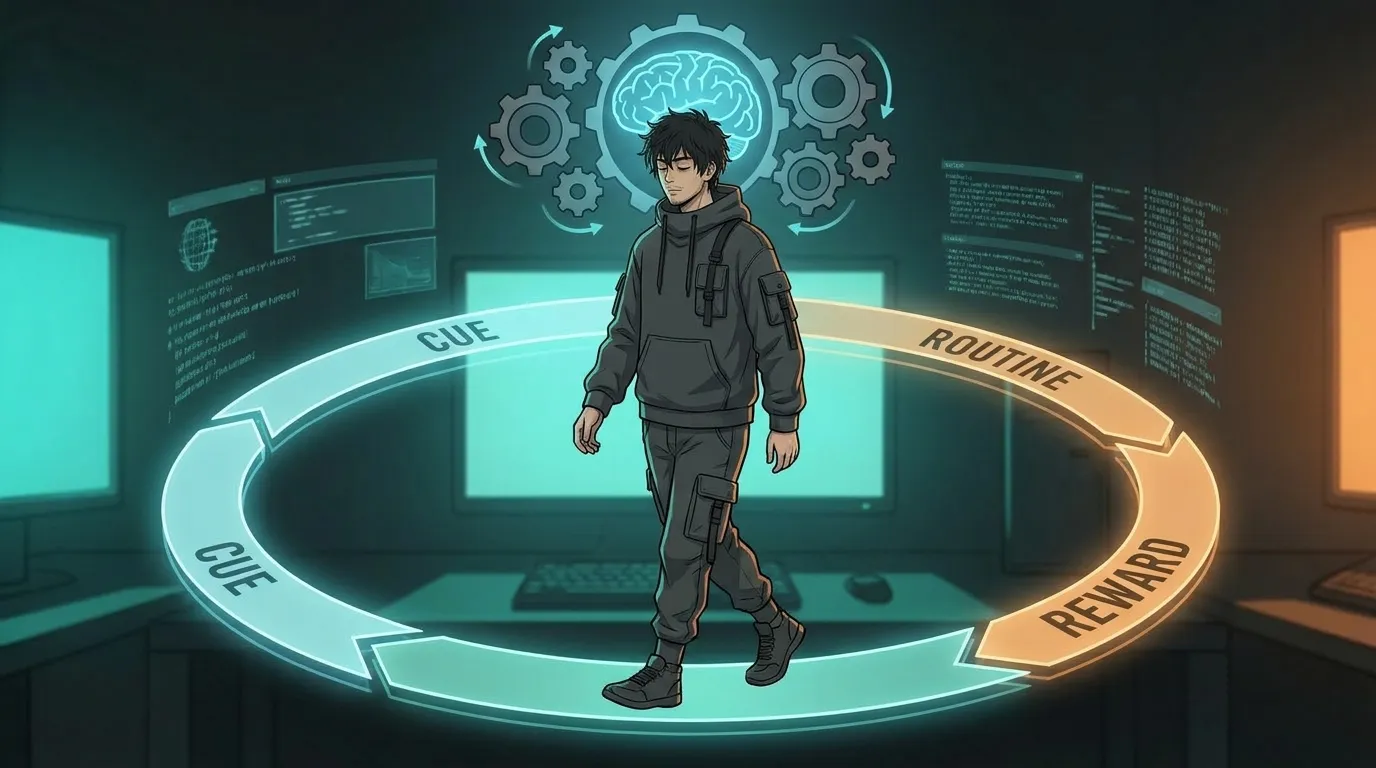
The PDES approach doesn’t just manage symptoms; it re-architects the underlying logic that drives your habit loops. This moves beyond superficial tracking to truly structural fixes, ensuring gentle productivity is a systemic outcome, not an effortful struggle.
core_build: Generating Protocols and Trackers
With a clear model and design, core_build generates the Standard Operating Procedures (SOPs) and trackers needed to execute your refactored ALgorithms. These aren’t just generic templates; they are tailored to your specific system architecture:
- Automated Triggers: Design environments that automatically trigger desired `habit loops`. For example, setting up your coffee machine to brew when your alarm goes off (a sensory cue) can bypass the need for conscious decision-making in the morning.
- SOPs for Low Energy States: Create specific, pre-defined mini-protocols for when your energy `BIOS` is running low. For instance, if you perceive low energy, your SOP might be: “Execute 15-minute power nap OR 5-minute deep breathing OR 10-minute walk.” This removes the cognitive burden of decision-making during a compromised state.
- Digital Checklists & Reminders: Leverage digital tools (e.g., a simple text file in your `output/` directory) to serve as your system’s internal scheduler, ensuring tasks are initiated even when motivation is absent.
core_measure: Applying `Life Quant` Metrics
PDES applies 10 trading metrics to daily execution, transforming subjective experience into objective data. For habit loops and burnout recovery, consider metrics like:
- Drawdown: The percentage drop in your available energy or productivity from your peak. Tracking this helps you identify patterns and anticipate crashes.
- Recovery Factor: How quickly and effectively you recover from periods of low energy or high demand. This informs the efficiency of your rest and recharge protocols.
- Expectancy: The average gain or loss you can expect per “unit of effort.” If a task consistently yields negative expectancy (high effort, low payoff, high friction), it’s a prime candidate for refactoring or elimination.
- Opportunity Cost: What are you *not* doing when stuck in a `deadlock`? Quantifying this reinforces the urgency of system optimization.
By measuring these aspects, you gain granular insight into your system’s performance, enabling precise adjustments rather than vague attempts at “more motivation.”
core_optimize: Debug, Refactor, and Automate
The final phase, core_optimize, is where continuous improvement happens. It’s about constantly debugging, refactoring, and automating your ALgorithms to prevent deadlocks and ensure smooth execution.
- A/B Testing Protocols: Experiment with different morning routines or task initiation strategies. A/B test a 10-minute warm-up versus a 2-minute “sprint start.” Measure the `Life Quant` metrics to see what truly works for *your* system.
- Feedback Loops: Analyze your `output/` artifacts (logs, trackers) regularly. Identify patterns where `habit loops` break down. Is it always after a late night? Always for a specific type of task? This feedback informs your refactoring.
- Automation: Wherever possible, automate decisions and actions. The less energy you spend deciding or initiating, the more you conserve for high-value work. This is the essence of a truly willpower free productivity system.
This iterative process ensures your system adapts and evolves, consistently reducing start friction and building robust, resilient habit loops without relying on an unsustainable supply of willpower.
Unlock Your System’s Full Potential: A PDES Solution to the Procrastination `Deadlock`
The “procrastination deadlock” is not a character flaw, but a symptom of an unoptimized system.
By applying the principles of PDES, you can move beyond the frustration of low energy and start friction to build a life that runs with precision and efficiency.
Your reality is a system, and like any system, it can be debugged, optimized, and upgraded. Stop trying to run high-level apps on a low-energy BIOS.
Your energy is a hardware constraint that, if not properly managed, will lead to a constant ‘deadlock’ and inevitable burnout.
The PDES framework offers a logical, science-backed methodology to manage your arousal levels, optimize your neural energy, and rebuild your foundational protocols from the ground up.
Ready to debug your biology and refactor your life?
Download the free protocol that shows you how to manage your arousal levels and neural energy before you hit a Deadlock (Burnout).