Stop trying to “find motivation.”
Start treating your life like the RPG it was meant to be played.
You don’t lack discipline.
You lack a clear progression system.
You’re trying to level up in life… but you’re playing without a character sheet, without a skill tree, without knowing what XP even looks like.
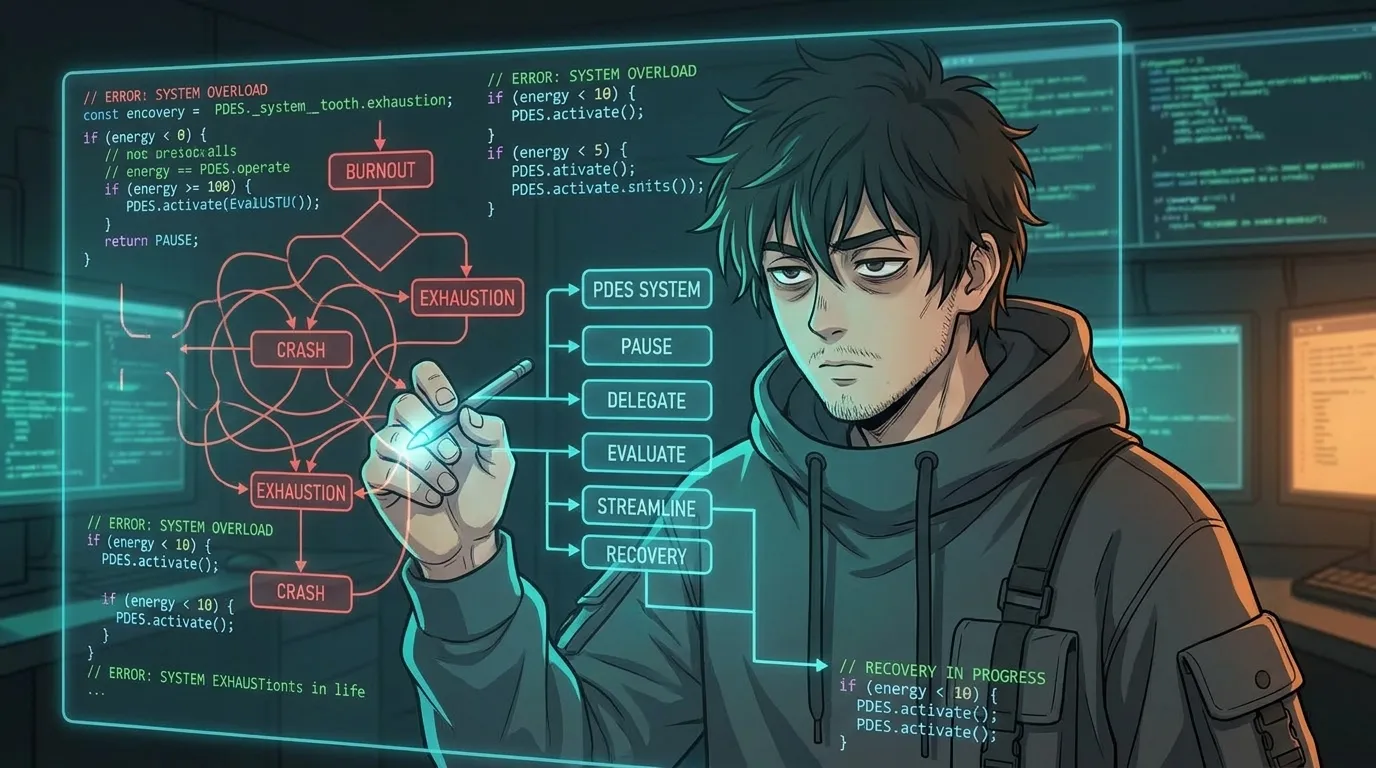
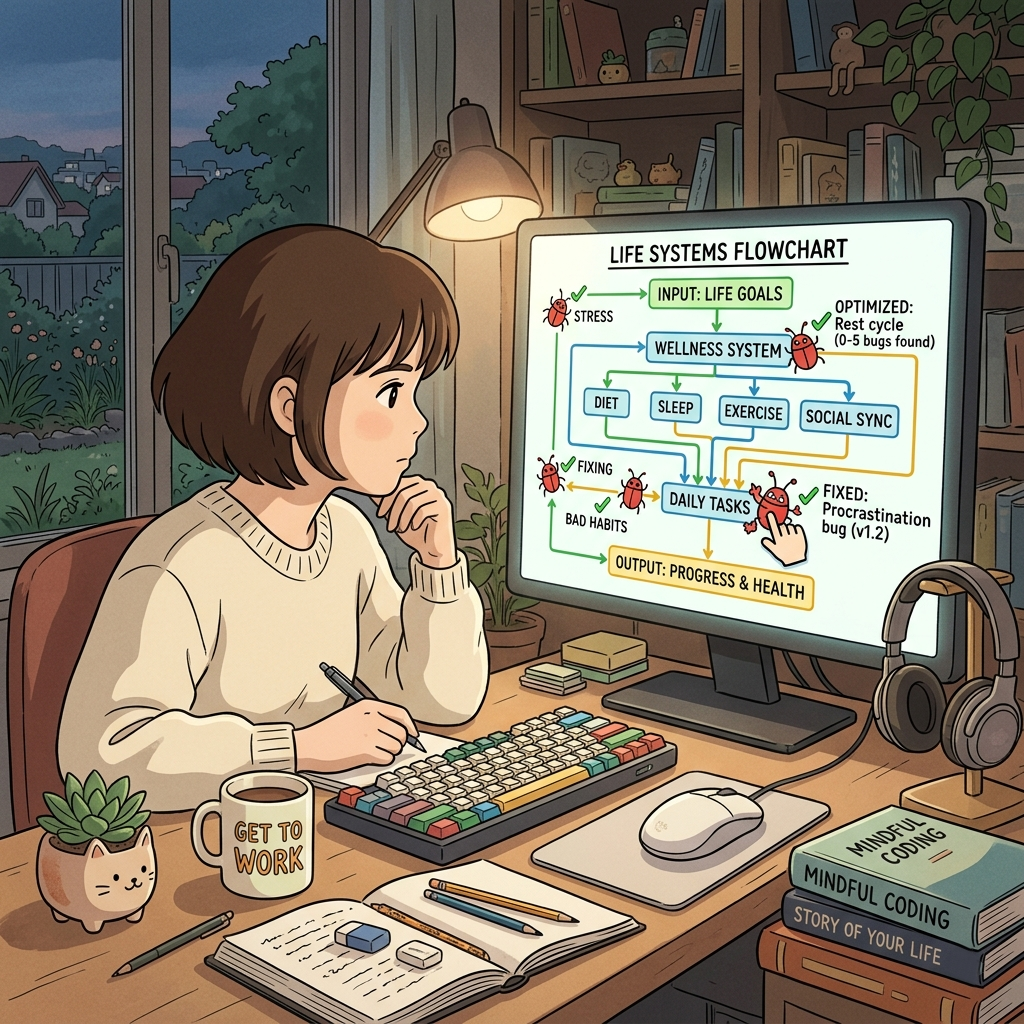
What if your personal growth wasn’t a vague wish — but a debuggable, optimizable system?
What if every habit, every fear, every blockage had a corresponding Computer Science concept… and every concept had a fix protocol?
That’s not fantasy. That’s PDES — the Personal Development Engine System.
And it turns your life into a playable, optimizable RPG.
Why Growth Feels Like Grinding Without XP?
You read the books. You watch the videos. You make the vision boards. Yet nothing sticks.
Why?
Because motivation is not a system. It’s a fleeting emotion.
What you need is a progression loop: clear inputs, predictable outputs, and visible feedback.
In a video game:
- You see your XP bar fill after every quest.
- You unlock new skills when you hit level thresholds.
- You know exactly what quest gives the most XP for your build.
- When you die, you respawn — not with guilt, but with data.
Now look at your life:
- Did you “gain XP” for meditating today? No one knows.
- Did reading that book “unlock” a new skill? No tracking.
- Did you fail at a habit? You feel guilty — not curious about the bug.
You’re not failing at growth.
You’re playing a broken game.
PDES: Your Life as a Playable RPG
PDES (Personal Development Engine System) treats your life like a modular software system.
It borrows from Computer Science, Game Design, and Systems Engineering to give you:
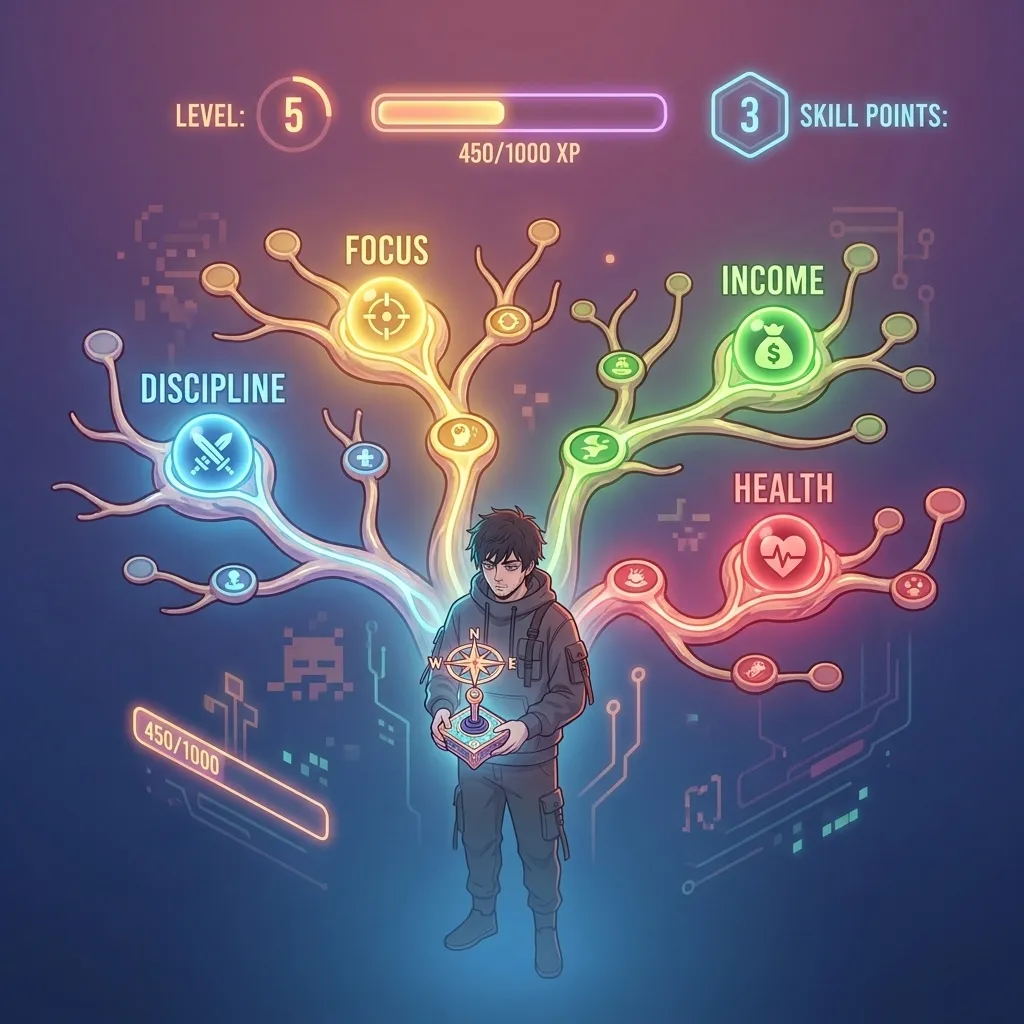
- A Skill Tree: Every competence (Discipline, Focus, Income, Health) is a node on your personal skill tree.
- XP & Levels: Every action grants XP. Hit thresholds? You level up — unlocking new capabilities.
- Quests (Habits): Daily actions are quests. Complete them reliably? You gain reputation and unlock
No more guessing.
You don’t wonder if journaling “counts.”
You see your Reflection skill tree node glow brighter.
The 6-Phase Engine: Your Core Game Loop
PDES runs on a universal 6-phase loop — the same core loop used in every successful game and software system:
- Perceive: Scan your current state. What’s broken? What’s missing? (Like checking your stats screen.)
- Model: Turn chaos into a clear system state. Map your habits, beliefs, and environment as variables in a simulation.
- Design: Create your character build. What class are you playing? (Builder? Strategist? Healer?) What skills synergize?
- Build: Craft your gear. Design SOPs, trackers, and rituals that are your equipment.
- Measure: Apply Life Quant metrics. Track your Win Rate, Drawdown, Sharpe Ratio — not in trading, but in life execution.
- Optimize: Debug your loop. Is your habit crashing? Is your energy leaking? Refactor the code.
This isn’t metaphor. It’s operational.
Every phase has a command. Every phase generates artifacts you can use.
Your Skill Tree: 32 Levels of Human Development
Inspired by the evolution of computing — from BIOS to Quantum Computing — PDES maps 32 foundational CS concepts to human development stages.
Each level (G{z|0≤z≤30}) is an archetype:
- Null: The uninitialized state. Pure potential. No structure.
- BIOS: Basic survival routines. Breathing, sleep, hydration.
- Syntax: Learning the rules. How to speak, act, exist in a system.
- Variable: Storing your first values. Your first beliefs, your first habits.
- Loops: Repeating patterns. Habits, routines, cycles.
- Memory: Retention. Learning from the past.
- Logic: Decision-making. If-then reasoning.
- I/O: Input/output. How you take in the world and put stuff back out.
- Object: Seeing yourself as a modular entity with properties and methods.
- Inherit: What you inherited — beliefs, trauma, tendencies.
- Thread: Multitasking. Managing concurrent life processes.
- Virtual: Simulation. Imagination, planning, future-self modeling.
- Cloud: External storage. Journals, apps, external knowledge.
- Server: Your core identity. What runs when everything else is idle?
- Access: Permissions. What are you allowed to attempt? What feels forbidden?
- Algorithms: Your core procedures. How you solve problems.
- DataBase: Your belief system. Your memory schema.
- Low-level: Primitive drives. Instincts, impulses.
- Locking: Resistance. Blocks, trauma locks, fear protocols.
- SuperCom: Peak states. Flow, deep focus, peak performance.
- Compiler: Turning intention into action. Compiling intention into behavior.
- Kernel: The core OS. Your foundational operating system.
- Root: Deep system access. Shadow work, core beliefs.
- Quantum: Probability thinking. Non-linear leaps. Intuition.
- Error: Failure tolerance. How you handle crashes.
- Source: Your source code. Your deepest values.
- Merge: Integration. Parts working together.
- Encrypt: Privacy. Boundaries. What you keep hidden.
- Admin: Self-governance. Who’s really in charge?
- Hidden: Latent skills. Untapped potential.
- Anonymous: Ego dissolution. Acting without needing credit.
- No-Code: Effortless Action.
Use /level [level_id] to load the archetype you’re currently embodying.
Are you stuck in Locking (G18)? Then your protocol is about safely releasing fear locks.
Are you ready for Compiler (G20)? Then it’s time to compile your intentions into unstoppable action.
Life Quant: Your RPG Stats Panel
In an RPG, you don’t just level up — you optimize your build. PDES gives you Life Quant: 10 trading-inspired metrics applied to life execution.
- Win Rate: % of habits completed as intended.
- Drawdown: How far you fall when you break streak.
- Risk/Reward: Effort vs. payoff of a habit.
- Expectancy: Average outcome per habit attempt.
- Sharpe Ratio: Return (progress) per unit of stress (effort).
- Position Sizing: How much effort to allocate to each habit.
- Profit Factor: Gross wins vs. gross losses in habit execution.
- Max Favorable: Best streak you’ve ever had.
- Recovery Factor: How fast you bounce back from a break.
- Opportunity Cost: What you gave up by choosing this habit.
These aren’t abstractions. They’re debugging tools.
Low Win Rate? Check your Position Sizing — you’re trying to do too much.
High Drawdown? Your recovery protocols are weak.
The Ultimate Cheat Sheet: 32 Problems → 32 Fixes
Every human struggle maps to a CS concept. Every CS concept has a fix protocol in PDES.
Struggling with consistency? That’s likely a Loops (G4) or Position Sizing issue.
Paralyzed by perfectionism? That’s often a Compiler (G20) or Locking (G18) block.
Feeling like an imposter? That’s often a hidden Imposter Syndrome loop tied to Root (G22) or Anonymous (G30).
You don’t need more motivation. You need the debug protocol.
That’s why we built the free cheat sheet: “32 Problems. 32 Fixes.”
Every life problem → mapped to a Computer Science concept
Every concept → has a corresponding fix protocol in PDES
Download it. Print it. Tape it to your wall. When you feel stuck, find the problem. Apply the fix. Level up.
Your First Quest: Start Playing
You don’t need to overhaul your life today. You just need to start playing.
- Perceive: Run
/perceive. What’s one area where you feel stuck? - Model: Run
/model. Turn that frustration into a clear system state. - Design: Run
/design. What’s one micro-habit that would give you XP? - Build: Run
/build. Create a tiny tracker for that habit. - Measure: After 3 days, run
/measure. What’s your Win Rate? - Optimize: Run
/optimize. Tweak the habit. Try again.
That’s one full game loop. Do it once. Then do it again. Soon, you’ll notice:
- You’re not “trying to build a habit.” You’re completing a quest.
- Failure isn’t shame — it’s debug data.
- Progress isn’t vague — it’s visible on your XP bar.
- You’re not hoping for change. You’re earning levels.
Life isn’t meant to be endured. It’s meant to be played.
Your character sheet is waiting. Your skill tree is ready. Your first quest awaits.
Stop grinding in the dark. Start playing the game you were born to win.
CTA: Get Your Debug Protocol
Every life problem has a fix. Every blockage has a protocol. Get the free cheat sheet that maps it all.
P.S. This isn’t theory. It’s the operating system for human optimization. Install it. Run it. Level up.
Ready to stop wishing and start leveling up?