
You’ve tried new routines, downloaded apps, and set reminders—yet the same habits keep slipping back. Frustration builds when effort doesn’t translate into results. This is the exact moment your life operating system needs a debugger.
Treating habits as executable code lets you apply proven debugging techniques: isolate variables, reproduce failures, log state, and patch the faulty loop. In this guide you’ll learn how to debug habits that don’t work using a structured Life Operating System approach, pinpoint the root cause in minutes, and build a fix plan that actually sticks.
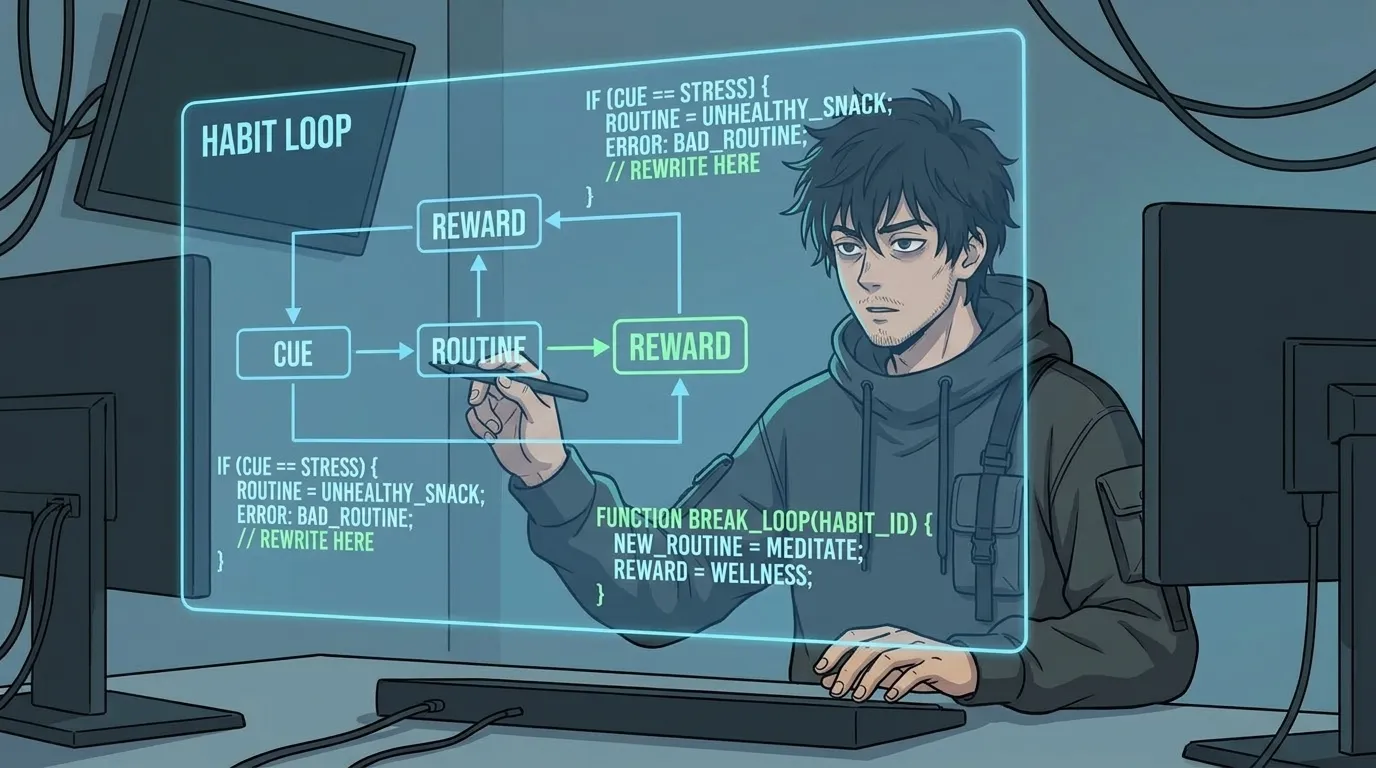
1. Map the Habit Loop: Cue → Routine → Reward
Every habit runs on a three‑step loop. If any step is miswired, the habit fails to deliver the desired outcome.
- Cue – the trigger that starts the loop (time of day, emotion, location).
- Routine – the behavior you execute (the habit itself).
- Reward – the payoff that reinforces the loop (relief, pleasure, progress).
If the reward is missing or misaligned, the loop will extinguish no matter how strong the cue.
Debug action: Write down the last three times you performed the habit. Identify the cue, what you actually did, and what you felt afterward. Look for mismatches—for example, you cue with stress but the routine gives you boredom instead of relief.
2. Apply a Debugging Mindset: Isolate, Reproduce, Log
Software engineers don’t guess; they reproduce the bug, log state, and change one variable at a time. Do the same with your habit.
- Reproduce – Perform the habit in a controlled setting (same time, same environment) to see if the failure is consistent.
- Log – Use a simple tracker (paper or notes app) to record cue intensity, routine execution, and reward rating (1‑5).
- Isolate Variables – Change only one element (e.g., swap the routine for a 2‑minute version) and observe the effect on reward.
Debug tip: Treat the log as your breakpoint inspector. After 5‑7 entries, patterns emerge—maybe the reward drops when you’re tired, indicating a need for a different routine or a rest cue.
3. Measure Habit Performance with Life Quant Metrics
Just as a trading system tracks win‑rate and drawdown, your habit loop needs quantitative feedback to know if a patch works.
- Win Rate – % of attempts where the habit delivered the intended reward (≥4/5).
- Drawdown – longest streak of failed rewards; signals when the loop is breaking down.
- Expectancy – (Win Rate × Avg Reward) − ((1‑Win Rate) × Avg Cost). Positive expectancy means the habit is net‑beneficial.
Debug action: After each logged attempt, calculate a quick win‑rate over the last 5 trials. If win‑rate falls below 60%, trigger a routine adjustment.
4. Build and Test a Fix Plan: A/B Iterate → Automate
Now that you have data, create a hypothesis, test it, and lock in the winning version.
- Hypothesis – “If I replace the 30‑minute scroll routine with a 5‑minute stretch when I feel bored (cue), my reward (energy) will increase.”
- A/B Test – Run the original routine for 3 days, then the new routine for 3 days, logging reward each time.
- Analyze – Compare win‑rate and expectancy between the two versions.
- Deploy – If the new version wins, make it the default and set an environmental cue (e.g., place yoga mat next to desk).
- Automate – Use habit‑stacking: attach the new routine to an existing solid habit (e.g., after brushing teeth).
Debug habit loop cheat sheet:
- Identify cue → log its intensity.
- Swap one variable at a time.
- Measure win‑rate, drawdown, expectancy.
- Iterate until expectancy > 0 for ≥7 consecutive days.
- Lock in with habit‑stacking and environmental design.
Summary: From Guesswork to Precise Debugging
By treating habits as code, you turn vague frustration into a repeatable debugging process. Map the loop, log state, apply Life Quant metrics, isolate variables, A/B test, and automate the winning version. In under 30 minutes you can surface the top three habit problems, locate their root cause, and ship a fix plan that actually runs.
Ready to stop guessing and start fixing?