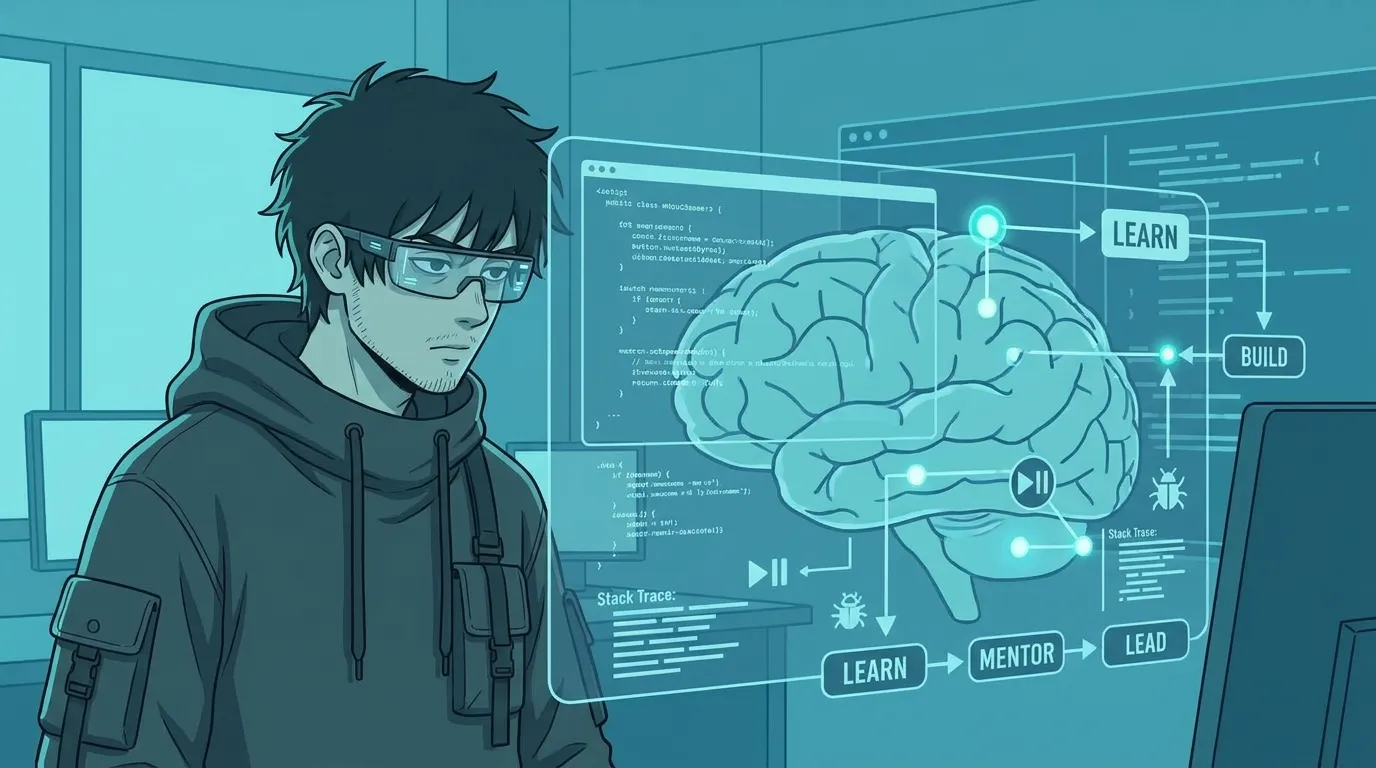
If you’ve ever felt that generic self‑help advice speaks a different language than your logical mind, you’re not alone. Analytical thinkers crave structure, measurable outcomes, and a clear cause‑and‑effect chain—yet most personal‑development content offers vague affirmations and one‑size‑fits‑all tips.
What if you could treat your growth like a software system: perceiving inputs, modeling states, designing algorithms, building modules, measuring performance, and optimizing loops? That’s exactly what the PDES (Personal Development System) framework delivers—a 32‑level, computer‑science‑engineered methodology built for minds that think in patterns, not platitudes.

Why Traditional Self‑Help Fails Analytical Minds
Standard advice relies heavily on motivation, intuition, and “just try harder.” For those who thrive on data, those suggestions feel like debugging without logs—you know something is off, but you lack the diagnostics to fix it.
- Missing metrics: No clear KPIs to track progress.
- No feedback loop: Actions are taken, but results aren’t measured systematically.
- One‑dimensional: Focuses on mindset while ignoring the systems that produce behavior.
The 32‑Level Framework: From BIOS to Quantum Thinking
PDES maps 32 foundational computer‑science concepts to human development stages, giving you a ladder that grows with your capability. Each level represents a mental “operating system” upgrade:
- Null → BIOS: Establish basic survival routines (sleep, nutrition, basic hygiene).
- Syntax → Variables: Define clear goals and the language you use to describe them.
- Loops → Memory: Build repeatable habits and store learning as reusable modules.
- Logic → I/O: Sharpen decision‑making gates and improve how you take in information and act on it.
- Object → Inherit: Model identity‑level beliefs and inherit empowering narratives from mentors.
- Thread → Virtual: Run parallel projects without cognitive overload; simulate outcomes before execution.
- Cloud → Server: Leverage external systems (tools, coaches, communities) as scalable resources.
- Algorithms → DataBase: Codify personal procedures and retrieve them instantly when needed.
- Low‑level → Locking: Optimize energy allocation and prevent burnout with proper “resource locks.”
- SuperCom → Compiler: Translate high‑level aspirations into concrete, executable steps.
- Kernel → Root: Gain full system access—master self‑authority and deep‑level patterns.
- Quantum → Error: Embrace uncertainty, treat setbacks as error‑handling routines, and iterate.
- Source → Merge: Integrate insights across domains; combine knowledge streams into a unified codebase.
- Encrypt → Admin: Protect mental bandwidth; administer priorities with strict access controls.
- Hidden → Anonymous: Operate ego‑free; let the system work without needing constant validation.
- No Code: Achieve flow where conscious effort fades—your optimized habits run autonomously.
“Your mind is the most powerful hardware you own; upgrade its firmware with a debuggable system, not with motivational pop‑ups.”
Core PDES Loop: Perceive → Model → Design → Build → Measure → Optimize
Regardless of the level you’re on, every improvement cycle follows the same six‑phase engine. Think of it as the IDE (Integrated Development Environment) for your life.
- Perceive: Capture raw data—time logs, mood scores, outcome metrics. Use a simple spreadsheet or a habit‑tracking app to get a baseline.
- Model: Translate observations into a state machine. Identify triggers, actions, and rewards (the “if‑then‑else” of your behavior).
- Design: Draft a prototype protocol. For example, a “focus sprint” model: 25 min work → 5 min review → repeat.
- Build: Create SOPs, checklists, and environmental cues that turn the design into automatic behavior.
- Measure: Apply Life‑Quant metrics (Win Rate, Expectancy, Sharpe Ratio, Drawdown, etc.) to quantify the effectiveness of your new loop.
- Optimize: Debug the loop—reduce friction, increase reward signals, refactor the SOP, and rerun the cycle.
Applying Life‑Quant Metrics to Your Daily Execution
Just as a trader evaluates a strategy, you can evaluate habits. Pick one behavior you want to improve (e.g., deep‑work sessions) and track these ten metrics:
- Win Rate: % of sessions where you hit the target output.
- Avg Win: Average value gained per successful session (words written, problems solved).
- Loss Rate: % of sessions that missed the mark.
- Avg Loss: Average cost of a failed session (time wasted, frustration).
- Expectancy: (Win Rate × Avg Win) − (Loss Rate × Avg Loss). Positive expectancy = profitable habit.
- Risk/Reward: Ratio of Avg Win to Avg Loss.
- Drawdown: Largest peak‑to‑trough dip in cumulative performance.
- Sharpe Ratio: (Expectancy − Risk‑Free Rate) / Std‑Dev of returns—measures consistency.
- Position Sizing: How much time/energy you allocate per session relative to total capacity.
- Profit Factor: Gross wins ÷ gross losses.
- Max Favorable Excursion: Best‑case upside within a session.
- Recovery Factor: Net profit ÷ max drawdown—how quickly you bounce back.
- Opportunity Cost: Value of the next‑best activity you forego.
Review these metrics weekly. If expectancy is negative, debug the loop: adjust win criteria, reduce loss cost, or increase position sizing on high‑probability actions. Over time, you’ll see your personal “equity curve” climb—just like a well‑backtested trading system.
Synthesis: From Debugging Habits to Mastering Life
When you stop chasing fleeting motivation and start treating personal growth as a system you can perceive, model, design, build, measure, and optimize, the guesswork disappears. Each 32‑level upgrade gives you a new layer of abstraction—from low‑level BIOS routines to quantum‑level strategic thinking—while the core PDES loop remains your reliable debugger.
Analytical thinkers deserve a framework that speaks their language: logic, metrics, and iterative improvement. With PDES, you don’t just read advice—you compile it, run it, profile it, and release a better version of yourself.
Ready to Deploy Your Personal Operating System?
If you’re ready to move beyond tips and templates and adopt a system that thinks like you do, grab the full Debug Protocol—a complete 32‑level methodology built on Computer Science logic.