
You’ve read the books, watched the videos, and made detailed plans. You know exactly what you should do—exercise, study, save money, start that side hustle. Yet when the moment comes, you find yourself stuck, scrolling, or procrastinating. The frustration isn’t a lack of willpower; it’s a signal that your personal operating system has a bug.
In software, when a program doesn’t produce the expected output, engineers don’t yell at the code for being “lazy.” They run a debugger, trace the execution, and fix the underlying logic. Your life works the same way. Treat your habits, environment, and beliefs as lines of code. When you apply a systematic debug cycle, intention finally turns into action.
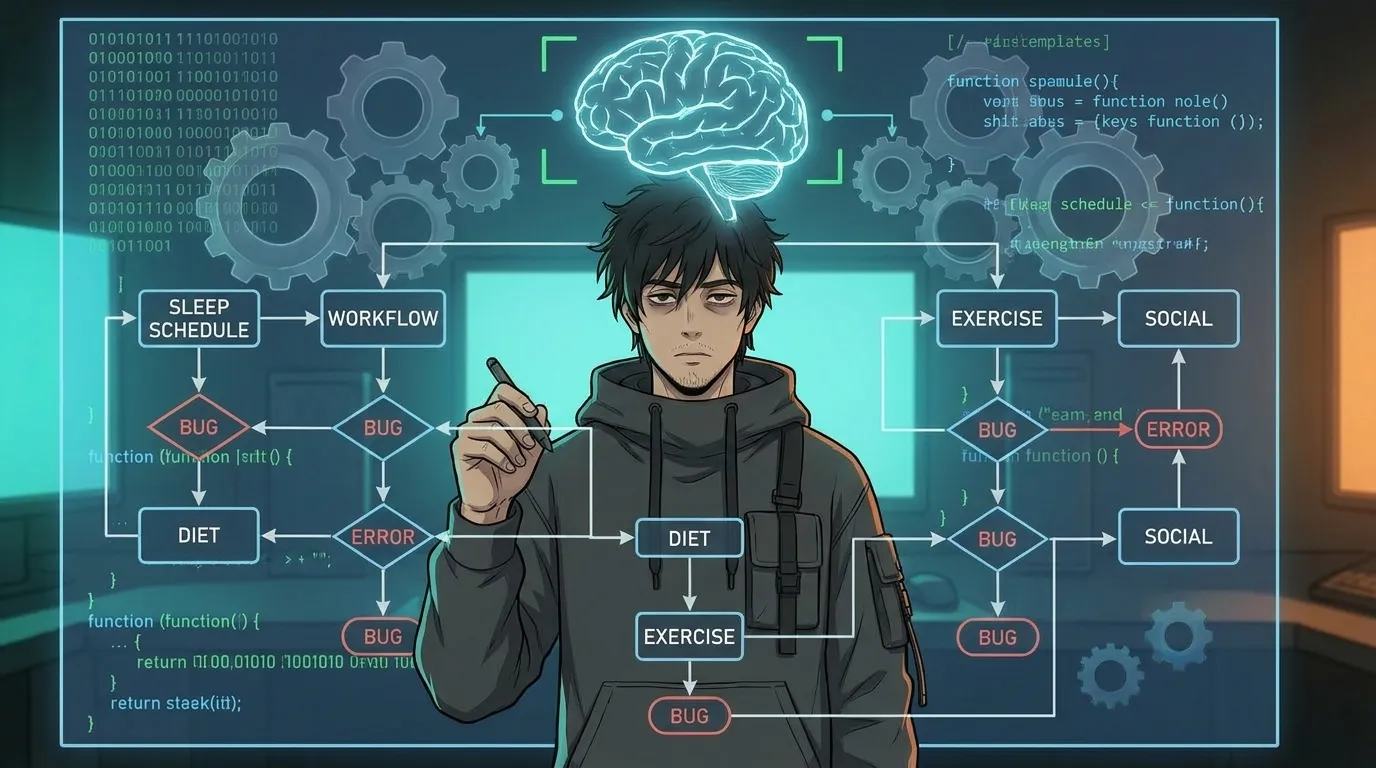
Why Do I Know What to Do But Can’t Do It? The System Gap
The core issue is a mismatch between knowledge (the what) and execution (the how). Knowledge lives in the prefrontal cortex; execution depends on basal ganglia loops, environmental cues, and identity narratives. If any part of that loop is mis‑wired, the signal gets lost.
“Action = (Intention × System) – Friction.”
Your Life as a System: Apply the DEBUG Protocol
Define, Observe, Identify, Fix, Validate
- Define – Clarify the exact output you want (e.g., “Write 500 words each morning”).
- Observe – Track what actually happens for 3‑5 days without judgment.
- Identify – Pinpoint the friction point: is it a cue, a routine, a reward, or a belief?
- Fix – Change one element of the loop (adjust the cue, simplify the routine, amplify the reward).
- Validate – Measure the result. If the output moved toward your target, keep the change; otherwise, iterate.
Think of DEBUG as a lightweight version of the scientific method, tuned for daily habits. By iterating on a single variable at a time, you avoid overwhelm and create measurable progress.
Common Bugs That Sabotage Action
Motivation Myths, Environment Glitches, Identity Loops
- Motivation Myth – Believing you need to “feel like it” before acting. Fix: action precedes motivation. Start with a 2‑minute micro‑habit.
- Environment Glitch – Cues that trigger the wrong behavior (e.g., phone on the pillow invites scrolling). Fix: redesign the cue‑routine‑reward chain.
- Identity Loop – Seeing yourself as “someone who procrastinates.” Fix: collect tiny proofs of the opposite identity (“I am someone who writes daily”).
Each bug is a line of faulty code. The DEBUG protocol lets you isolate and patch them without rewriting your entire personality.
Running the Debug Protocol: Step‑by‑Step
Step 1: Define the Desired Output
Be specific, measurable, and time‑boxed. Instead of “get fit,” write “complete a 20‑minute strength workout Monday, Wednesday, Friday at 7 am.”
Step 2: Observe the Current Loop
Use a simple tracker: date, cue, routine, reward, outcome (✓/✗).
Step 3: Identify the Friction Point
Look for patterns: Does the habit fail after a specific cue? Is the routine too complex? Is the reward delayed or missing?
Step 4: Fix One Variable
Change only one element at a time.
Examples:
- Move the cue: place workout clothes beside your bed.
- Simplify the routine: start with just two push‑ups.
- Increase the reward: listen to a favorite podcast only while exercising.
Step 5: Validate and Iterate
After 3‑5 days, check your tracker. If the success rate rose ≥ 20 %, keep the change. If not, return to Observe and test a different variable.
Measuring Progress with Life‑Quant Metrics
Win Rate, Drawdown, Expectancy
Just as a trader tracks win‑rate and drawdown, you can gauge habit performance:
- Win Rate = (Days habit completed) / (Total days tracked).
- Drawdown = longest consecutive streak of missed days.
- Expectancy = (Win Rate × Average Gain) – ((1‑Win Rate) × Average Loss). Treat “gain” as progress toward your goal and “loss” as friction.
When Expectancy turns positive, your system is profitable—you’re gaining more than you’re losing.
Putting It All Together: Your Personal Debugging Log
Template Example
Date: 2025-09-26 Goal: Write 500 words Cue: Alarm at 6:30 am Routine: Open laptop, write for 25 min Reward: First cup of coffee Outcome: ✗ (wrote 120 words) Friction: Cue too early, felt groggy Fix: Move alarm to 7:00 am, add 5‑min stretch Next Day Outcome: ✓ (520 words) Print or duplicate this table for each habit you’re debugging. Over weeks, you’ll see a clear trajectory from buggy code to optimized performance.
Why Self‑Help Doesn’t Work — And What Does
You don’t have a motivation problem. You have a system problem. The free protocol below gives you the exact DEBUG checklist, tracking sheet, and a quick‑start guide to turn intention into automatic action.
Start debugging today. Your future self will thank you for the lines of code you finally got right.