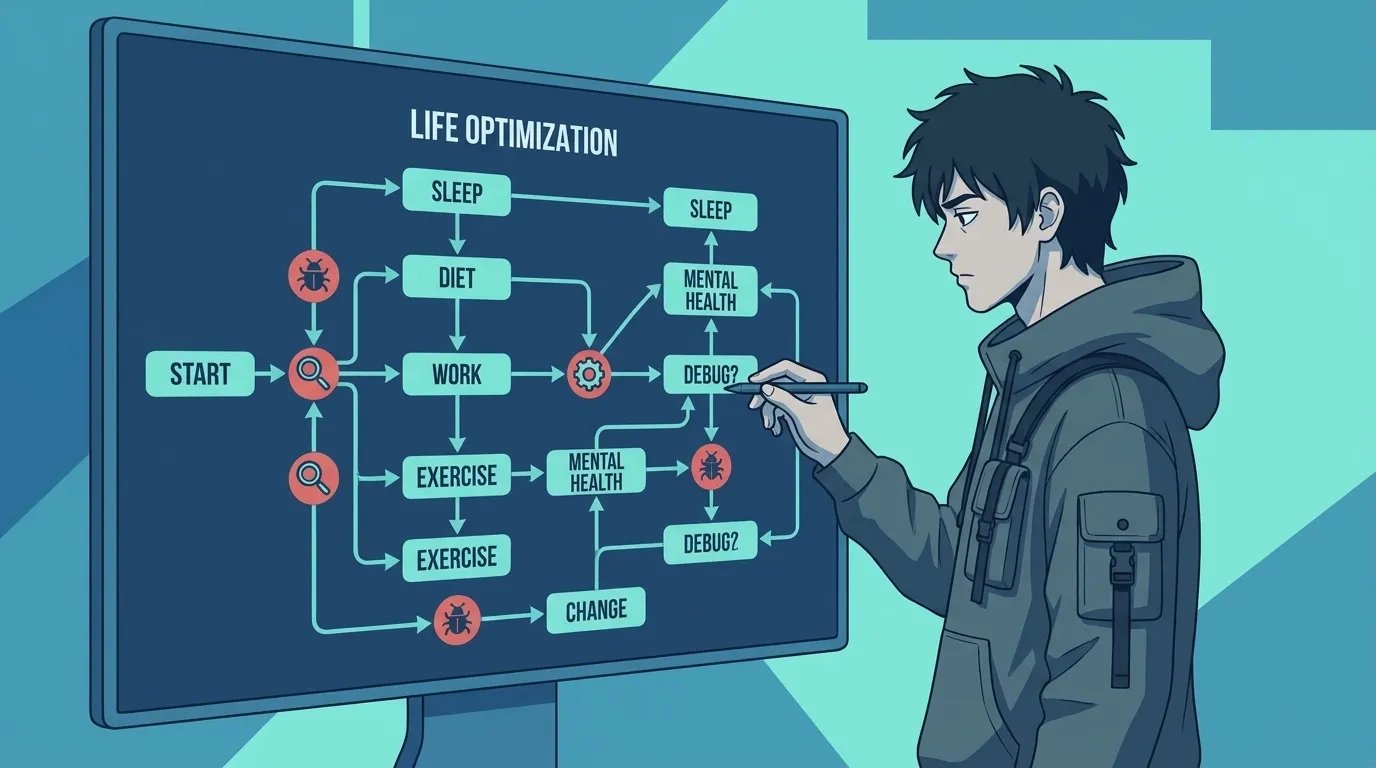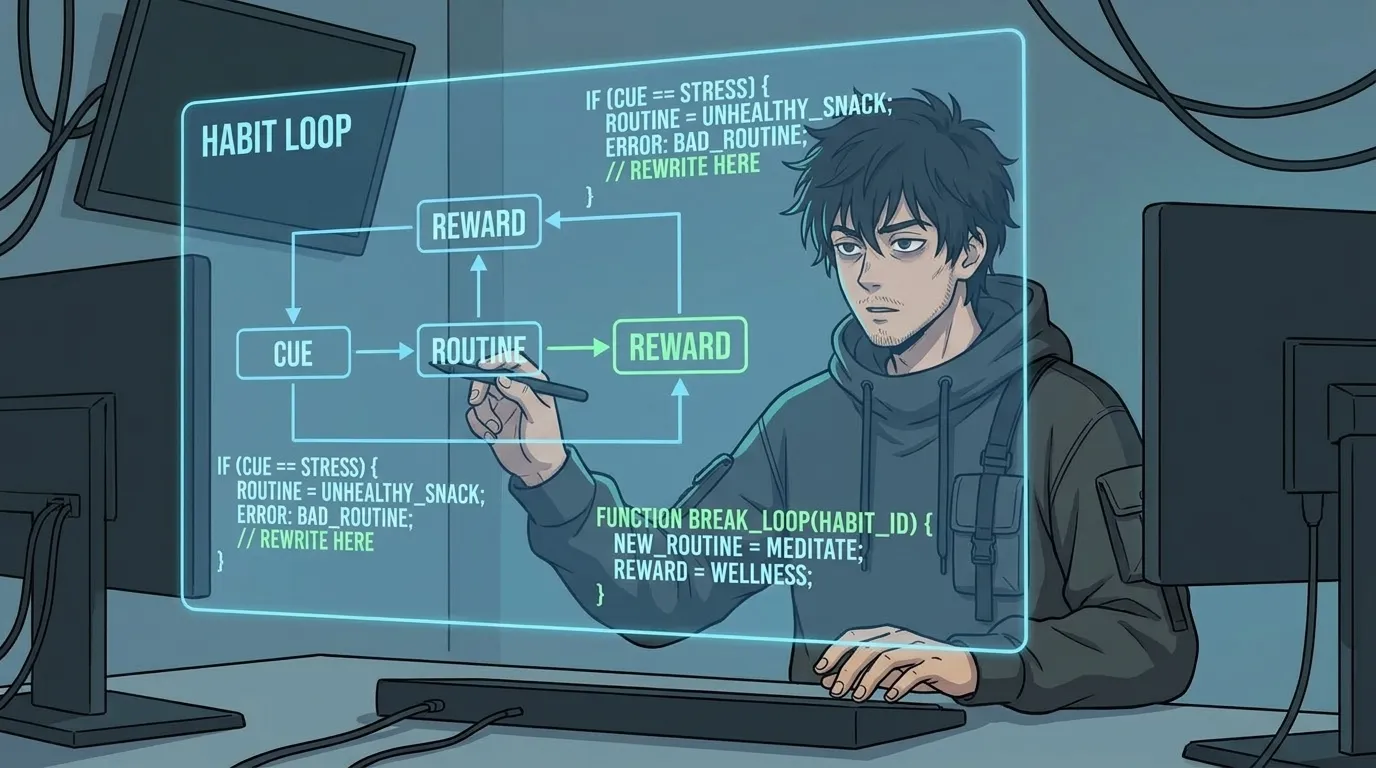
You’ve bought another course, saved a dozen podcasts, and filled your notes with “life‑changing” habits — yet you feel more stuck than ever.
That heavy, restless feeling isn’t laziness; it’s self‑help fatigue.
When the advice piles up faster than you can act, motivation evaporates and the cycle of hope‑frustration‑hope repeats.
The good news?
You don’t need more tips.
You need a system that filters noise, turns intention into action, and measures real progress.
Below is a concise, actionable framework drawn from the PDES (Perceive‑Model‑Design‑Build‑Measure‑Optimize) method that pulls you out of the self‑help overload and puts you back on a clear path forward.
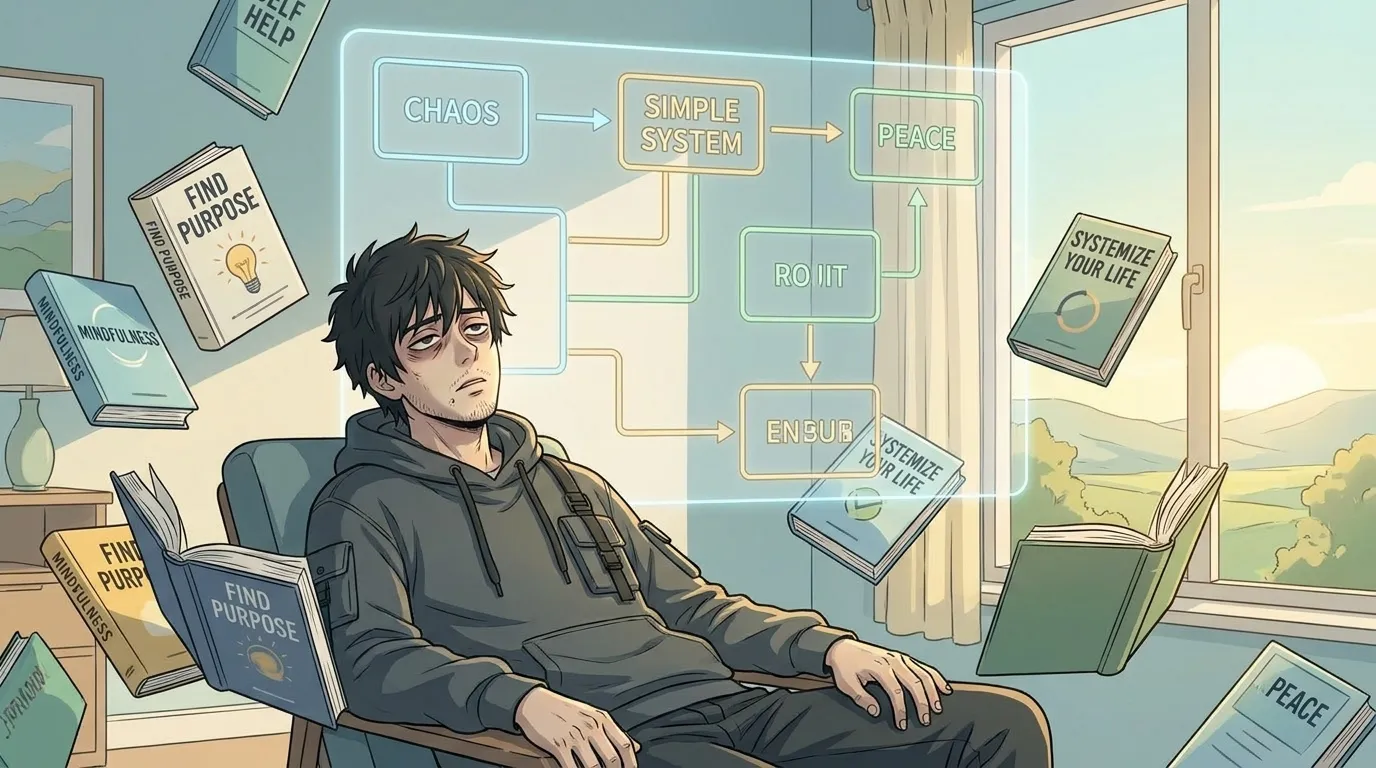
What Is Self‑Help Fatigue?
Self‑help fatigue occurs when the consumption of personal‑development content outpaces implementation. Symptoms include:
- Constantly searching for the “next big thing” but never finishing what you start.
- Feeling guilty or anxious when you skip a habit or miss a lesson.
- Jumping from one routine to another without seeing lasting results.
- Experiencing mental clutter that makes decision‑making feel exhausting.
“Information without execution is just entertainment for the mind.”
The Motivation Myth
We blame ourselves for lacking motivation, but motivation is a by‑product of clear progress, not the driver. When your system is vague, every action feels like a guess, and guesswork drains willpower. The fix isn’t to “motivate harder”; it’s to design a process that makes the next step obvious and low‑friction.
Systems Over Advice: The PDES Lens
PDES treats your life like a debuggable software system. Instead of chasing another hack, you run through six repeatable phases:
- Perceive – Capture the raw reality: what’s actually happening, not what you wish were happening.
- Model – Turn observations into a simple state‑machine (inputs, processes, outputs).
- Design – Create a lightweight protocol that defines the next action.
- Build – Generate the SOP, tracker, or reminder you need.
- Measure – Apply Life‑Quant metrics (win‑rate, expectancy, friction) to see if the protocol works.
- Optimize – Debug, refactor, and automate the loop.
A 3‑Step Protocol to Break Free
You don’t need the full PDES engine to start. Use this condensed version to cut through the noise today:
- Perceive – 5‑Minute Brain Dump – Set a timer. Write every self‑help idea, habit, or goal buzzing in your head. No filtering. When the timer ends, highlight the one item that, if done consistently, would move the needle most.
- Model & Design – The “One‑Action” Rule – Convert that highlighted item into a single, atomic action that takes ≤ 5 minutes (e.g., “Write one paragraph” instead of “Write a chapter”). Define the trigger (time of day, preceding habit) and the exact output.
- Build, Measure, Optimize – Track & Tweak – Put a simple checkbox tracker on your wall or phone. Each day you complete the action, mark it. After seven days, calculate your win‑rate (completed days ÷ 7). If win‑rate ≥ 80 %, keep the action; if lower, identify the friction (time, environment, ambiguity) and redesign the trigger or action.
Progress = (Action × Consistency) – Friction
Why This Works
By limiting scope to one tiny, measurable action, you:
- Reduce decision fatigue—your brain knows exactly what to do next.
- Build evidence of competence, which naturally boosts motivation.
- Create a feedback loop (measure → optimize) that prevents the endless consumption cycle.
From Fatigue to Forward Motion
Self‑help fatigue is a signal, not a sentence. It tells you that your current approach is missing a system. Implement the three‑step protocol above, watch your win‑rate climb, and let the momentum replace the frantic search for the next secret. When the system is clear, the advice becomes a supplement—not the main course.
Ready to Replace Overwhelm with a Simple System?
Grab the free Debug Protocol that walks you through the full PDES cycle, includes printable trackers, and shows how to scale from one action to a full‑life operating system.