You’ve read the books, listened to the podcasts, tried the morning routines, and still feel stuck. The self‑improvement grind leaves you more exhausted than empowered. If this sounds familiar, you’re not broken—you’re using the wrong operating system for growth.
Traditional self‑help treats motivation as the fuel and willpower as the engine. When you’re burnt out, that engine sputters no matter how much fuel you pour in. The real issue isn’t a lack of drive; it’s a missing system that converts intention into reliable action.

The Self‑Help Trap: Why More Advice Makes You Worse
Self‑help markets promise quick fixes: “5‑minute confidence hacks,” “instant productivity secrets,” or “the one habit that changes everything.” Each new tip adds another item to your mental to‑do list, increasing cognitive load rather than reducing it.
What actually happens:
- Decision fatigue spikes as you constantly choose which advice to follow.
- Guilt accumulates when you can’t sustain the new routine.
- Progress stalls because you’re optimizing tactics, not the underlying process.
“You don’t have a motivation problem. You have a system problem.”
Motivation Isn’t the Lever—Systems Are
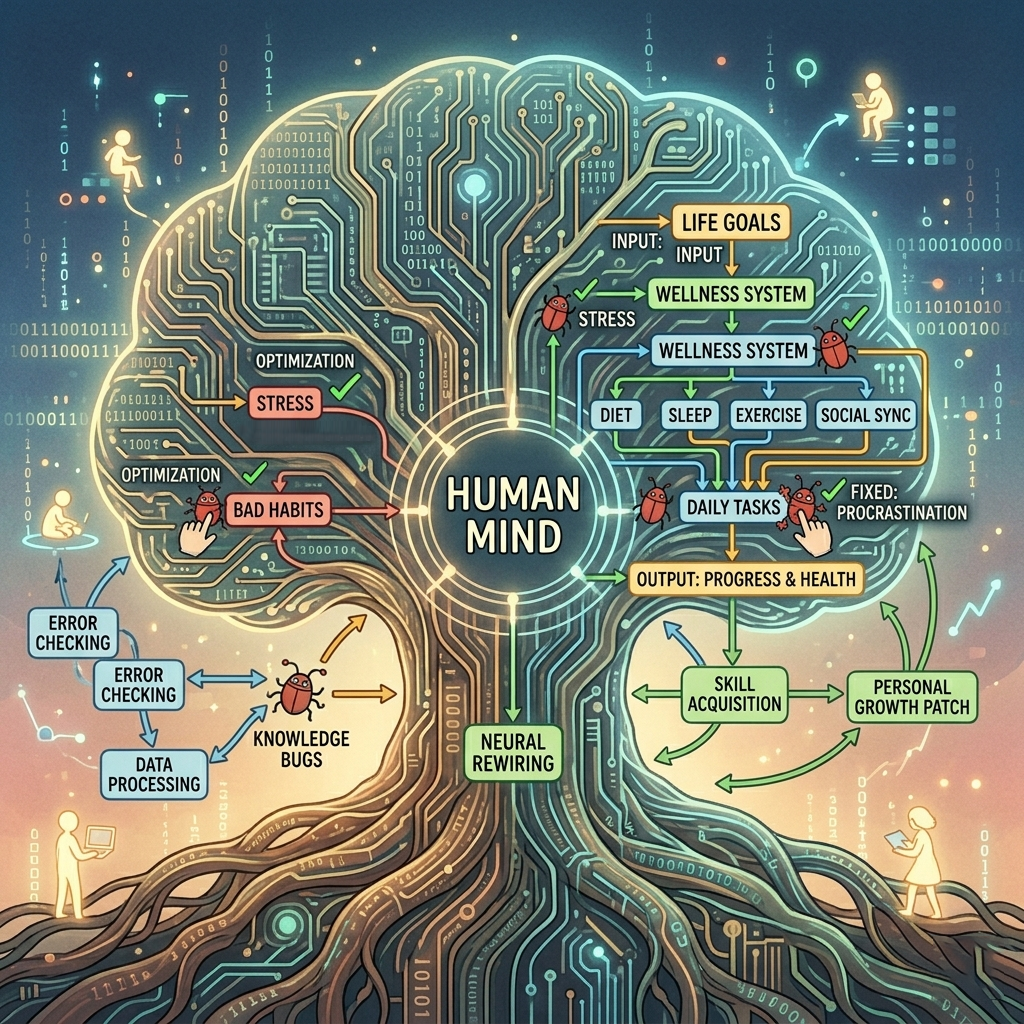
Think of yourself as a computer. Motivation is the user clicking an icon; the system is the OS that decides whether the program launches, runs smoothly, or crashes. When the OS is buggy, no amount of clicking will get you reliable results.
A robust personal system has three layers:
- Perception – Accurate data about your current state (energy, time, emotions).
- Model – A simple map of how your habits, environment, and goals interact.
- Loop – A repeatable process that takes perception, updates the model, and triggers the next action.
When these layers are defined, action becomes automatic—you don’t need to rely on fleeting motivation.
Introducing the Debug Protocol: A System‑First Approach
The PDES (Personal Development Engineering System) Debug Protocol treats self‑improvement like debugging code:
- Perceive – Capture a 5‑minute “system snapshot”: energy level, stress triggers, pending tasks.
- Model – Sketch a quick flow:
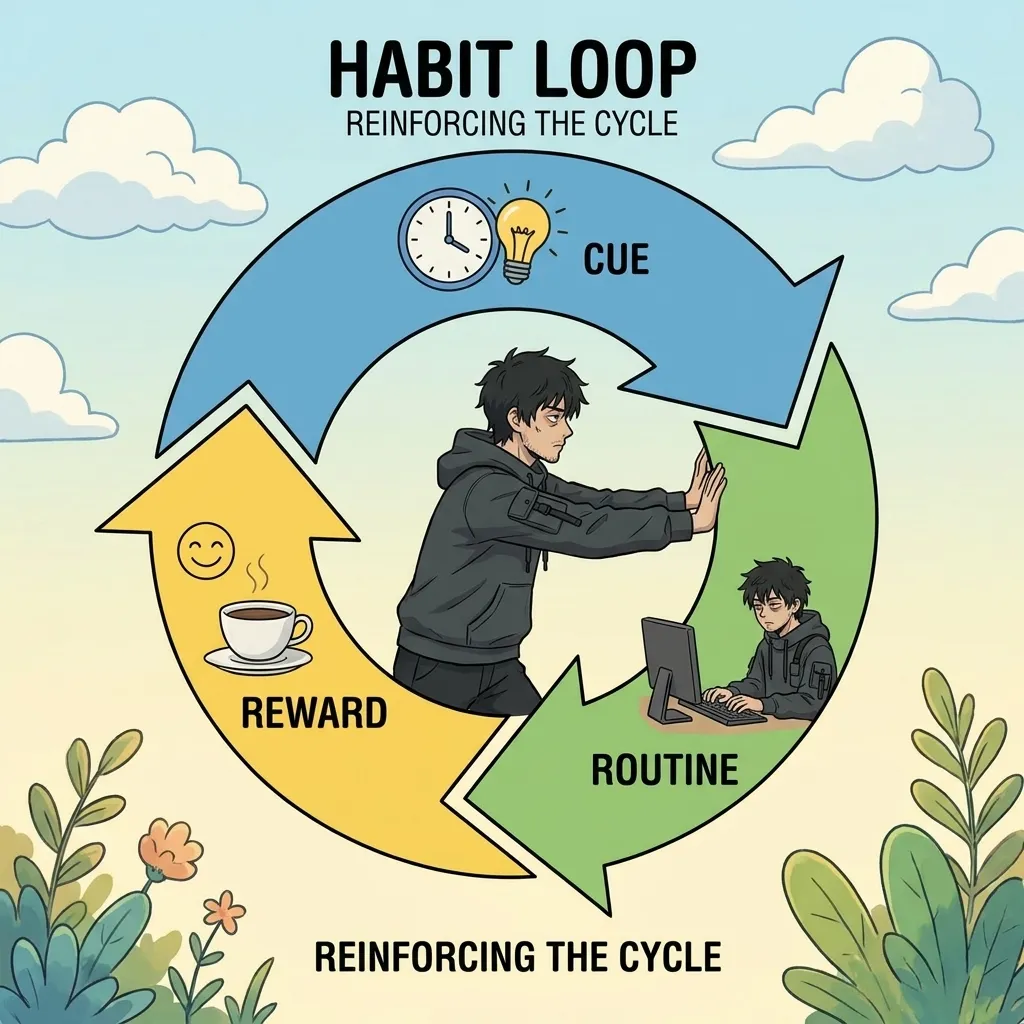
Trigger → Routine → Reward → Feedback. Identify the weak link. - Design – Choose ONE micro‑adjustment (e.g., move a trigger, simplify the routine, add an immediate reward).
- Build – Write the adjustment as a concrete SOP (Standard Operating Procedure) and place it where you’ll see it.
- Measure – Track two metrics: adherence % (did you do it?) and impact score (1‑5 on how it felt).
- Optimize – Review weekly; keep what works, discard what doesn’t, iterate.
Because the protocol focuses on system state rather than inspiration, it works even when you’re exhausted.
Getting Started: Three‑Day Starter Sprint
You don’t need an overhaul. Try this lightweight sprint to feel the difference:
- Day 1 – Perceive: Set three phone alarms (morning, midday, evening). When each rings, jot down a quick note: energy (1‑5), dominant emotion, one thing you need.
- Day 2 – Model & Design: Look at your notes. Pick the recurring pattern that drains you most (e.g., “afternoon slump → scroll social media”). Design a 2‑minute counter‑action (stand, stretch, drink water). Write it on a sticky note.
- Day 3 – Build, Measure, Optimize: Place the sticky where you see the trigger. After each attempt, mark a check (done) or X (missed) and give the impact a 1‑5 score. At day’s end, calculate adherence % and average impact. Decide: keep, tweak, or drop.
After three days you’ll have concrete data—not just feelings—showing whether a tiny system tweak moves the needle. That’s the feedback loop that turns self‑help from wishful thinking into reliable progress.
From Tired to Powered: The Shift That Lasts
When you stop chasing motivation and start engineering your personal OS, growth becomes sustainable. You’ll notice:
- Less mental clutter—your actions are guided by a visible SOP, not a fleeting urge.
- Higher adherence because the barrier to start is deliberately low.
- Clear metrics that tell you when you’re improving, eliminating guesswork.
Ready to trade the endless self‑help carousel for a debuggable system? Grab the free protocol that puts the pieces together.
You don’t have a motivation problem. You have a system problem. Fix the system, and the results follow.