Tired of collecting self‑help tips that never stick? You read a book, try a habit, and a week later you’re back where you started. The problem isn’t lack of motivation—it’s missing the underlying system that governs your behavior.
What if you could treat your life like a software system: perceive inputs, model states, design processes, build infrastructure, measure performance, and continuously optimize? That’s exactly what thinking in systems for personal growth enables. By applying computer‑science logic and engineering rigor, you turn vague aspirations into debuggable, upgradable code.
What Is Systems Thinking?
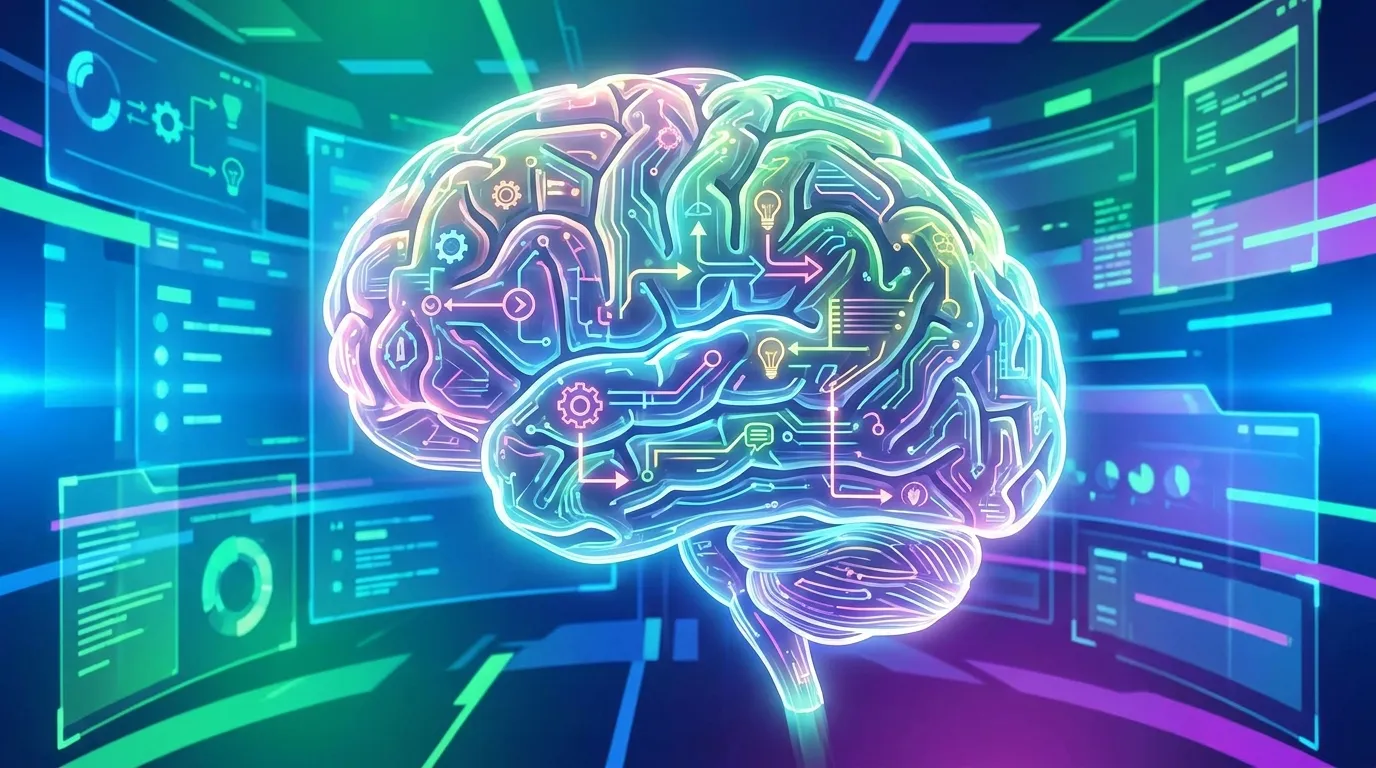
Systems thinking is the discipline of seeing wholes, interconnections, and patterns rather than isolated events. It relies on mental models—internal representations of how the world works—to predict outcomes and identify leverage points.
- Feedback loops: Reinforcing (snowball) or balancing (stabilizing) cycles that drive behavior.
- Stocks and flows: Accumulators (knowledge, energy, money) and the rates that change them.
- Delay and nonlinearity: Actions today may show results weeks later, and small tweaks can produce outsized effects.
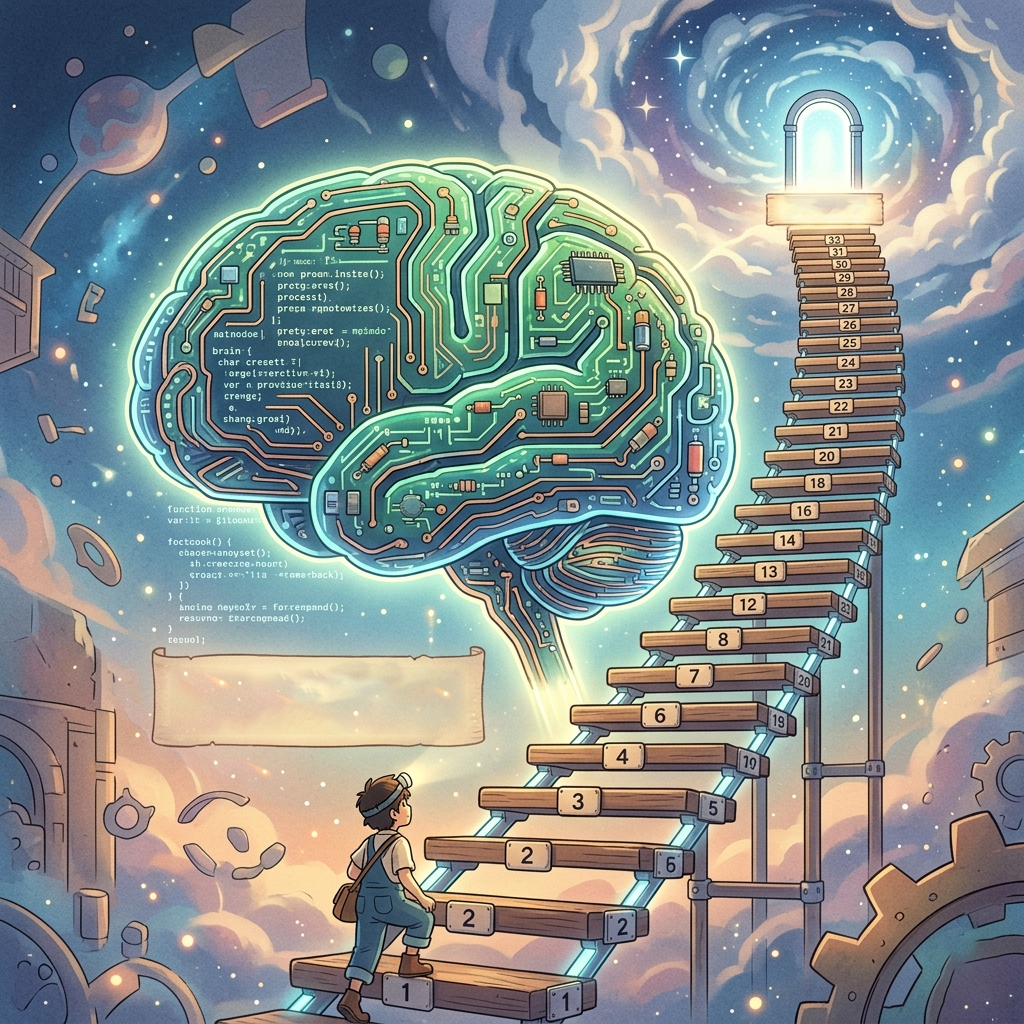
The PDES Framework: A 32‑Level Operating System for Life
PDES (Personal Development Engineered System) maps 32 foundational computer‑science concepts—from BIOS to Quantum—onto human development stages. Each level is a new abstraction layer that adds capability, just like moving from machine code to high‑level languages.
- Null → BIOS: Basic survival routines (sleep, nutrition, breathing).
- Syntax → Variables: Language skills and core beliefs.
- Loops → Memory: Habit formation and recall systems.
- Logic → I/O: Decision‑making and communication protocols.
- Object → Inherit: Identity modeling and role adoption.
- Thread → Virtual: Parallel projects and simulated scenarios.
- Cloud → Server: Scalable knowledge networks and mentorship.
- Algorithms → DataBase: Problem‑solving routines and stored experiences.
- Low‑level → Locking: Focus mechanisms and distraction guards.
- SuperCom → Compiler: High‑performance learning and skill translation.
- Kernel → Root: Core values and meta‑cognition.
- Quantum → Error: Embracing uncertainty and debugging failures.
- Source → Merge: Creativity and integration of insights.
- Encrypt → Admin: Privacy boundaries and self‑governance.
- Hidden → Anonymous: Subconscious drives and shadow work.
- No Code: Flow states where action transcends deliberate thought.
The Core Loop: Perceive → Model → Design → Build → Measure → Optimize
Every PDES cycle follows six engineering phases, mirroring a software development lifecycle.
- Perceive: Gather raw data—journals, sensor logs, feedback—to diagnose the current state.
- Model: Translate observations into a state‑machine diagram (states, triggers, actions).
- Design: Create protocols, decision trees, and interface specifications.
- Build: Generate SOPs, trackers, and environmental scaffolding.
- Measure: Apply Life Quant metrics (Win Rate, Drawdown, Sharpe Ratio, etc.) to quantify performance.
- Optimize: Debug bottlenecks, refactor habits, and automate feedback loops.
Life Quant: Trading Metrics for Daily Execution
Borrowing from quantitative finance, PDES tracks ten key performance indicators that reveal whether your personal “portfolio” is appreciating.
- Win Rate: Percentage of daily intentions successfully executed.
- Drawdown: Maximum consecutive days below baseline energy or mood.
- Risk/Reward: Effort invested vs. outcome gained per habit.
- Expectancy: Expected value of a routine (probability × payoff).
- Sharpe Ratio: Return per unit of stress or volatility.
- Position Sizing: Allocation of time and attention across life domains.
- Profit Factor: Gross gains divided by gross losses (e.g., productive vs. distracting time).
- Max Favorable Excursion: Peak performance streak within a habit cycle.
- Recovery Factor: Speed of bounce‑back after a setback.
- Opportunity Cost: Value of the best alternative foregone by choosing a current activity.
From Theory to Practice: Debugging Your Morning Routine
Let’s walk through a concrete example: optimizing the first 90 minutes after waking.
- Perceive: Log sleep quality, wake‑time, initial mood, and immediate urges (phone, coffee).
- Model: Identify states – Groggy, Alert, Distracted, Focused. Triggers – light exposure, caffeine, email check.
- Design: Protocol – 5 min sunlight → 10 min movement → 20 min deep work → 5 min review.
- Build: Prepare outfit night‑before, place water bottle by bed, set phone to Do Not Disturb until after deep work.
- Measure: Track Win Rate (% of days protocol followed), Drawdown (consecutive low‑energy mornings), Sharpe Ratio (focus minutes per stress unit).
- Optimize: If distraction spikes after coffee, move caffeine intake after deep work; if drawdown > 2 days, add a 5‑minute breathing reset.
Synthesis: Why a System Beats Tips
Tips are patches; they address symptoms without touching the underlying code. A system, by contrast, provides:
- Predictability: You can forecast how a change in one variable (e.g., sleep) propagates through your entire life.
- Scalability: Once a loop is debugged, it can be cloned to other domains (work, fitness, relationships).
- Resilience: Feedback loops automatically correct drift, reducing reliance on willpower.
- Transferability: The same mental models (state machines, latency, throughput) apply whether you’re debugging code or habits.
By thinking in systems, you stop chasing fleeting motivation and start engineering lasting growth. The PDES 32‑level ladder gives you a clear roadmap, while the core perceive‑model‑design‑build‑measure‑optimize loop turns every day into a debuggable sprint.
Ready to Run Your Personal Operating System?
Stop collecting tips. Start compiling a life that executes reliably, scales gracefully, and continuously improves. The full PDES methodology—complete with level maps, loop templates, and Life Quant dashboards—is waiting for you.