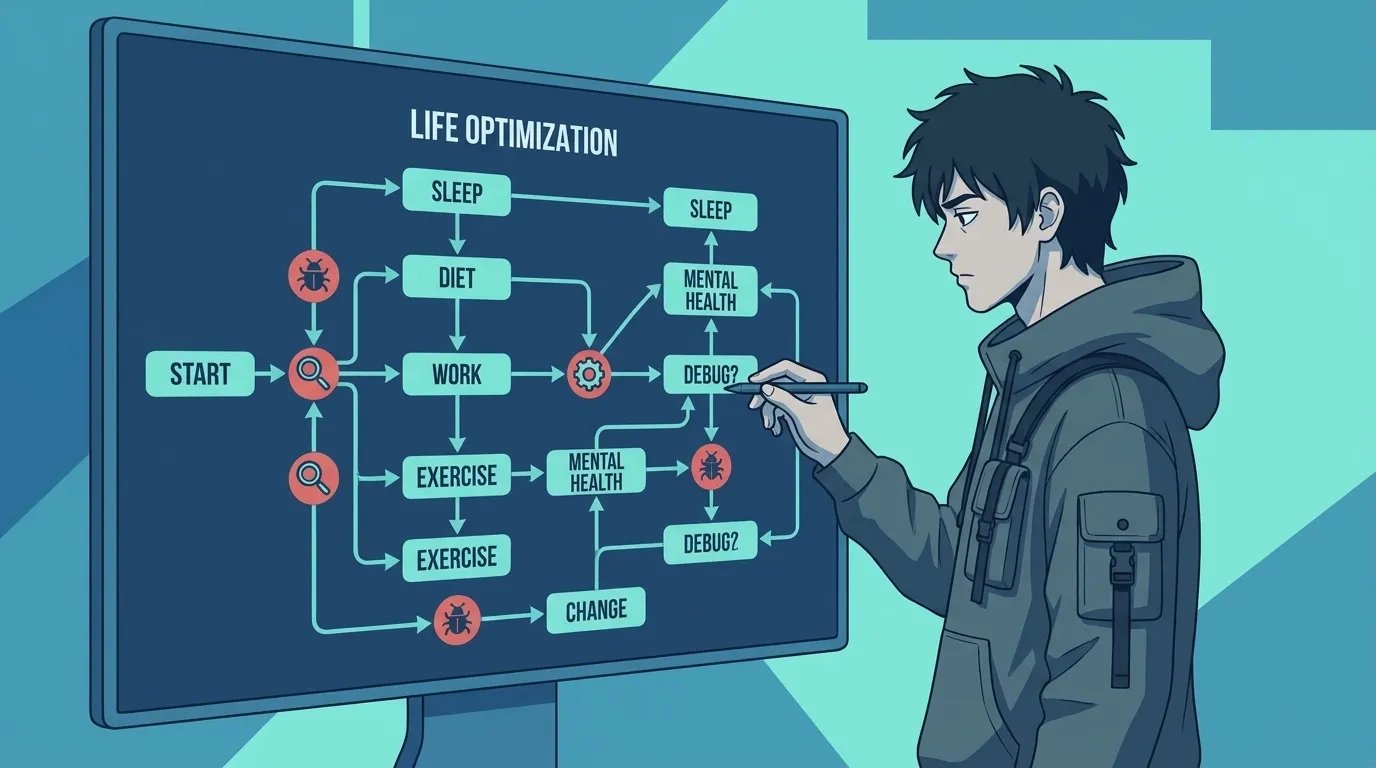
Ever feel like you’re stuck in a loop—starting a new habit with enthusiasm, only to watch it fizzle out after a few days? You’re not alone. Most people rely on willpower, but willpower is a finite resource that runs out when life gets busy. What if you could treat habit formation like engineering a reliable system—one that runs on autopilot, adjusts itself when things go off track, and scales with your goals?
In this guide, you’ll learn how to construct a habit building system rooted in habit loops and system thinking. By the end, you’ll have a repeatable process to design, implement, measure, and optimize any habit—so change stops feeling like a battle and starts feeling like an upgrade.

Why Willpower Fails and Systems Succeed
Willpower works like a sprint: you can exert intense effort for a short burst, but fatigue sets in quickly. Systems, on the other hand, operate like a well‑tuned engine—they use feedback, structure, and environment to keep running with minimal conscious effort.
Key insight: A habit is not a single action; it’s a loop of cue, routine, and reward. When you design the loop intentionally, you make the behavior automatic.
“You do not rise to the level of your goals. You fall to the level of your systems.” – James Clear
The Four‑Layer Habit Building System
Think of your habit system as a stack of layers, each adding reliability and adaptability:
Foundation – Environment Design: Shape your surroundings so the desired cue is obvious and the unwanted cue is hidden.
Layer 1 – Habit Loop Definition: Clearly identify cue, routine, and reward.
Layer 2 – Tracking & Feedback: Record performance data to create a feedback signal.
Layer 3 – Optimization Loop: Use metrics (Life Quant) to iterate and improve the loop.
Each layer can be implemented with simple tools—a sticky note, a habit tracker spreadsheet, and a weekly review ritual.
Step‑by‑Step: Designing Your First Habit Loop
Identify the Cue: Choose a trigger that already happens daily (e.g., “after I brush my teeth”). Write it down.
Define the Routine: Keep the action tiny—so small it feels ridiculous not to do it (e.g., “do two push‑ups”).
Select the Reward: Pair the routine with an immediate, satisfying reward (e.g., “listen to one favorite song”).
Write the Loop Statement: “After cue, I will routine because it gives me reward.”
Example: “After I pour my morning coffee, I will write one sentence in my journal because it clears my mind.”
Building the Tracking & Feedback Layer
What gets measured gets managed. A simple tracking sheet creates the feedback signal that tells your brain the loop is working.
Create a table with columns: Date, Cue, Routine Done? (Y/N), Reward Delivered? (Y/N), Notes.
Each night, spend 30 seconds filling in the row.
At week’s end, calculate your completion rate: (Number of Y’s ÷ Total days) × 100.
Life Quant Metric – Win Rate: % of days you completed the routine. Aim for ≥80% before increasing difficulty.
Optimizing the Loop with System Thinking
Once you have data, treat the habit loop like a control system. Use the OODA loop (Observe, Orient, Decide, Act) to iterate.
Observe: Look at your tracking data. Where are the failures?
Orient: Ask why the cue failed or the reward felt insufficient.
Decide: Choose one variable to tweak—cue timing, routine difficulty, or reward type.
Act: Implement the change for the next week and record the impact.
Example tweak: If you missed the routine because you were tired, move the cue earlier in the day or reduce the routine to one push‑up.
Scaling: From Tiny Habits to Life‑Changing Systems
Once a habit reaches a stable win rate (≥80% for two consecutive weeks), you can “level up” using the progressive overload principle:
Increase routine difficulty by 10‑20% (e.g., from two push‑ups to five).
Keep the same cue and reward to preserve the loop integrity.
Repeat the tracking‑optimization cycle.
Over months, tiny increments compound into substantial skill gains—whether it’s fitness, learning, or productivity.
Common Pitfalls and How to Avoid Them
Overcomplicating the cue: Stick to something you already do without thinking.
Choosing a reward that’s delayed: The brain needs an immediate payoff to strengthen the loop.
Skipping tracking: Without data, you’re guessing, not optimizing.
Trying to change too many habits at once: Master one loop before adding another.
Your 30‑Minute Debug Session: Find the Top 3 Problems, Isolate the Root Cause, Build a Fix Plan
Knowing the framework is powerful, but applying it to your unique situation is where real change happens. I’ve created a free guided session that walks you through:
Identifying your top three habit‑related pain points.
Using root‑cause analysis to pinpoint the underlying system flaw.
Designing a custom habit building system with cue, routine, reward, tracking, and optimization steps.
Click the button below to claim your free debug session and start building systems that work—no willpower required.
Final Thought: Systems Are the Ultimate Leverage
When you shift from hoping you’ll stick to a habit to engineering a system that makes sticking inevitable, you unlock a new level of personal effectiveness. The habit building system isn’t just a tool for one behavior—it’s a meta‑skill you can apply to any area of life: health, learning, relationships, or career.
Start small, track relentlessly, optimize continuously, and watch how tiny loops compound into massive transformation.