Feel like you’re constantly reacting instead of progressing?
You set goals, try new habits, and still end up stuck in the same loops.
The problem isn’t lack of effort—it’s missing a system that treats your life like a debuggable, optimizable engine.
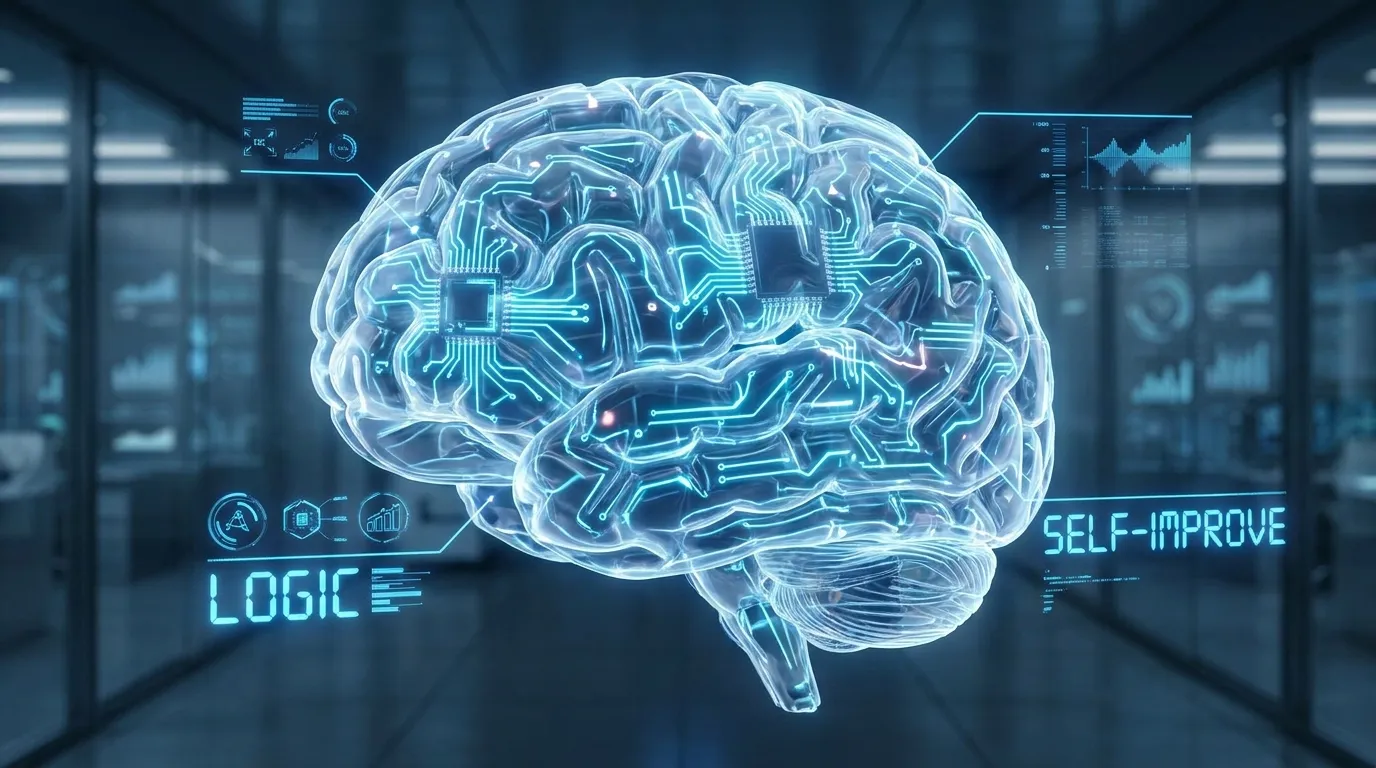
PDES (Personal Development Engineered System) applies Computer Science logic and systems engineering to personal growth.
Instead of scattered tips, you get a 32‑level Life OS that maps your reality to modular components you can perceive, model, design, build, measure, and optimize.

What Is a Life Operating System?
A Life OS is the control layer that runs beneath your daily actions.
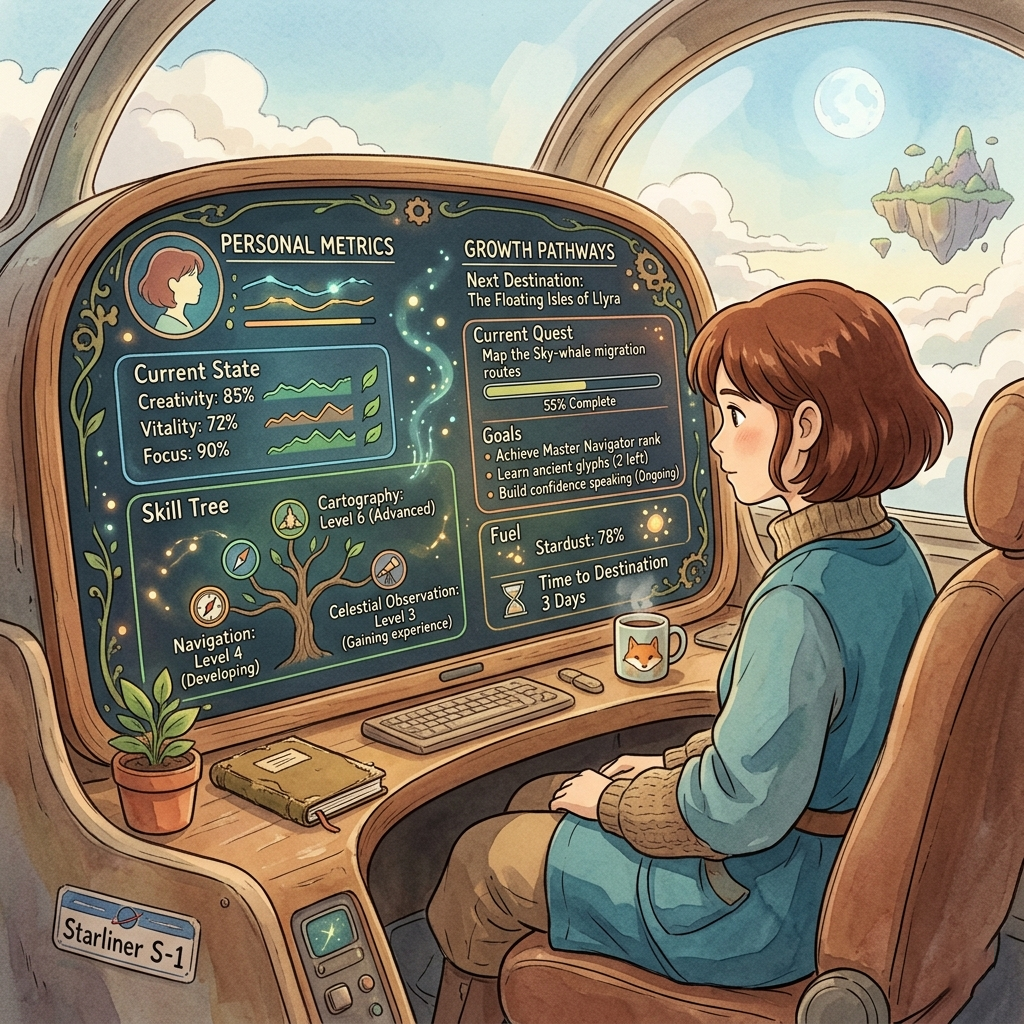
Just as an operating system manages hardware resources, your Life OS manages time, energy, attention, and skills. It provides:
- Clear state perception (where you are now)
- A structured model of how inputs become outcomes
- Actionable designs that turn intentions into repeatable processes
- Built‑in measurement and feedback loops for continuous improvement
“Your life is a system. Optimize the system, not just the symptoms.”
The 32‑Level Ladder: From BIOS to Quantum
PDES borrows the abstraction layers of computing and maps them to human development stages.
Each level adds a new capability, letting you “compile” higher‑order skills on top of solid foundations.
- Null
- BIOS – Basic survival, grounding, and system check.
- Syntax – Learning the language of goals, habits, and rituals.
- Variable – Storing and updating personal metrics (energy, focus, mood).
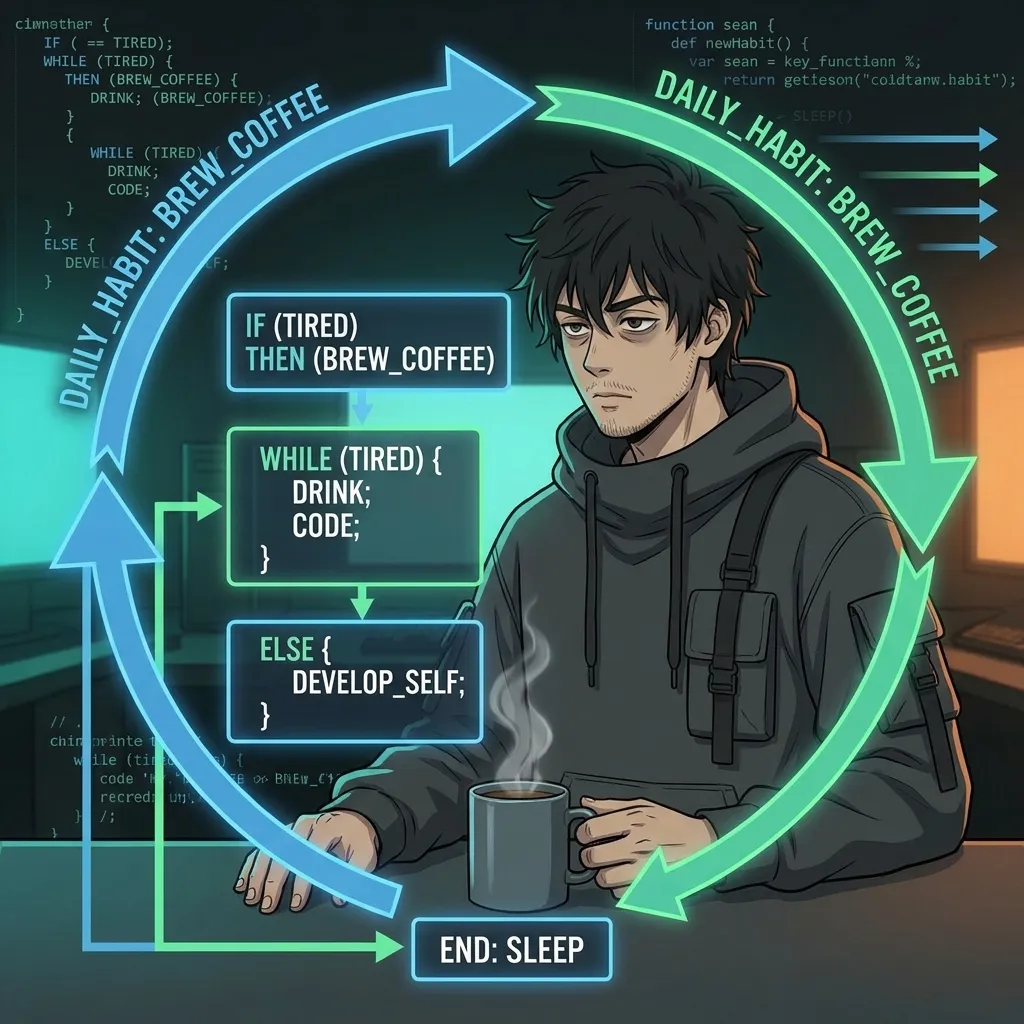
- Loops – Building repeatable routines and feedback cycles.
- Memory – Creating knowledge bases and reflective journals.
- Logic – Decision trees, prioritization frameworks, and risk assessment.
- I/O – Managing inputs (information, nutrition) and outputs (work, creativity).
- Object – Encapsulating skills into reusable modules (e.g., “Communication”).
- Inherit – Leveraging mentorship, templates, and proven patterns.
- Thread – Parallel processing: balancing multiple projects without burnout.
- Virtual – Simulating outcomes before execution (mental rehearsal, scenario planning).
- Cloud – Leveraging external resources, communities, and outsourcing.
- Server – Building personal infrastructure that serves others (leadership, content).
- Access – Securing permissions, boundaries, and energy management.
- Algorithms – Optimizing decision paths for maximum ROI on time.
- DataBase – Structuring lifelong learning and skill acquisition.
- Low‑level – Mastering fundamentals: sleep, nutrition, movement.
- Locking – Protecting focus through deep work and distraction‑free zones.
- SuperCom – Integrating advanced tools (AI, automation) into your workflow.
- Compiler – Turning raw intentions into executable plans.
- Kernel – Core identity, values, and purpose that govern all processes.
- Root – Ultimate responsibility and ownership of your system.
- Quantum – Operating beyond linear limits: exponential growth, creativity spikes.
- Error – Embracing failure as diagnostic data.
- Source – Continuous learning and updating your own codebase.
- Merge – Collaborative version control: aligning with partners, teams, vision.
- Encrypt – Protecting mental energy, setting boundaries, safeguarding focus.
- Admin – Governing the whole OS: reviews, audits, and system upgrades.
- Hidden – Unconscious drives; bringing them into awareness.
- Anonymous – Ego‑less action; pure contribution without attachment.
- No Code – Intuitive flow where actions feel effortless, guided by the OS itself.
You don’t need to master all 32 levels at once. Start where you feel the most friction—often the Kernel (purpose) or Loops (habits)—and let the system guide you upward.
Core Six‑Phase Engine: Perceive → Model → Design → Build → Measure → Optimize
Every level runs through the same six‑phase cycle. Think of it as the instruction set your Life OS executes:
- 01 Perceive – Diagnose the current state. Use journals, time‑tracking, and self‑audits to capture data.
- 02 Model – Translate reality into a structured state‑machine. Draw flowcharts of how habits lead to outcomes.
- 03 Design – Create protocols and SOPs. Define triggers, actions, and feedback loops.
- 04 Build – Generate the assets: trackers, templates, checklists, and environment tweaks.
- 05 Measure – Apply Life Quant metrics: Win Rate, Drawdown, Expectancy, Sharpe Ratio, etc., to everyday actions.
- 06 Optimize – Debug, refactor, and automate. Remove friction, amplify leverage, and iterate.
“Optimization is not a one‑time event; it’s the continuous cycle that keeps your Life OS running at peak efficiency.”
How to Start Optimizing Your Life System Today
You don’t need a massive overhaul. Follow this quick start protocol:
- Perceive (5 min) – Write down three things that drained your energy yesterday and three that gave you energy.
- Model (5 min) – Sketch a simple flowchart: Trigger → Action → Result for one habit you want to change.
- Design (5 min) – Choose one micro‑adjustment (e.g., place a water bottle on your desk to increase hydration).
- Build (2 min) – Set a phone reminder or sticky note as the trigger.
- Measure (ongoing) – Each day, mark ✅ if you drank the water, ❌ if you missed it. Track your streak.
- Optimize (weekly) – Review the streak. If Win Rate < 80 %, adjust the trigger or reduce the friction.
Repeat this cycle for every area you wish to upgrade—career, health, relationships, wealth. Over time, the micro‑wins compound into a high‑performing Life OS that thinks like you do.
Why This Beats Tips and Templates
Most advice is stateless: it tells you what to do but ignores where you are in your system. A Life OS is stateful. It knows your current variables, runs the appropriate phase, and updates itself after each iteration. The result?
- Predictable progress, not random bursts.
- Clear diagnostics when you plateau.
- Scalable complexity—you can add new levels without crashing the system.
Take the First Engineered Step
If you’re ready to stop guessing and start optimizing your life system with a proven, computer‑science‑backed framework, the next step is just a click away.
This free download gives you the full 32‑level map, the six‑phase engine worksheet, and a starter tracker to begin debugging your life today.
Final Thought: Your Life Is Code
Every thought, habit, and decision is a line of code in the program that is you. By treating your existence as a system, you gain the power to refactor limiting beliefs, optimize inefficient loops, and compile a version of yourself that runs smoother, faster, and with far fewer errors.
Start perceiving, modeling, designing, building, measuring, and optimizing. Your optimized life system is waiting.