
Stuck in a cycle of starting strong Monday, fading by Wednesday, and feeling guilty about “broken” habits?
You’re not lazy—you’re missing a system.
A daily routine isn’t a rigid checklist; it’s a feedback‑driven system that turns intention into automatic action.
When you design it with habit loops and system thinking, discipline becomes a byproduct of design, not willpower.
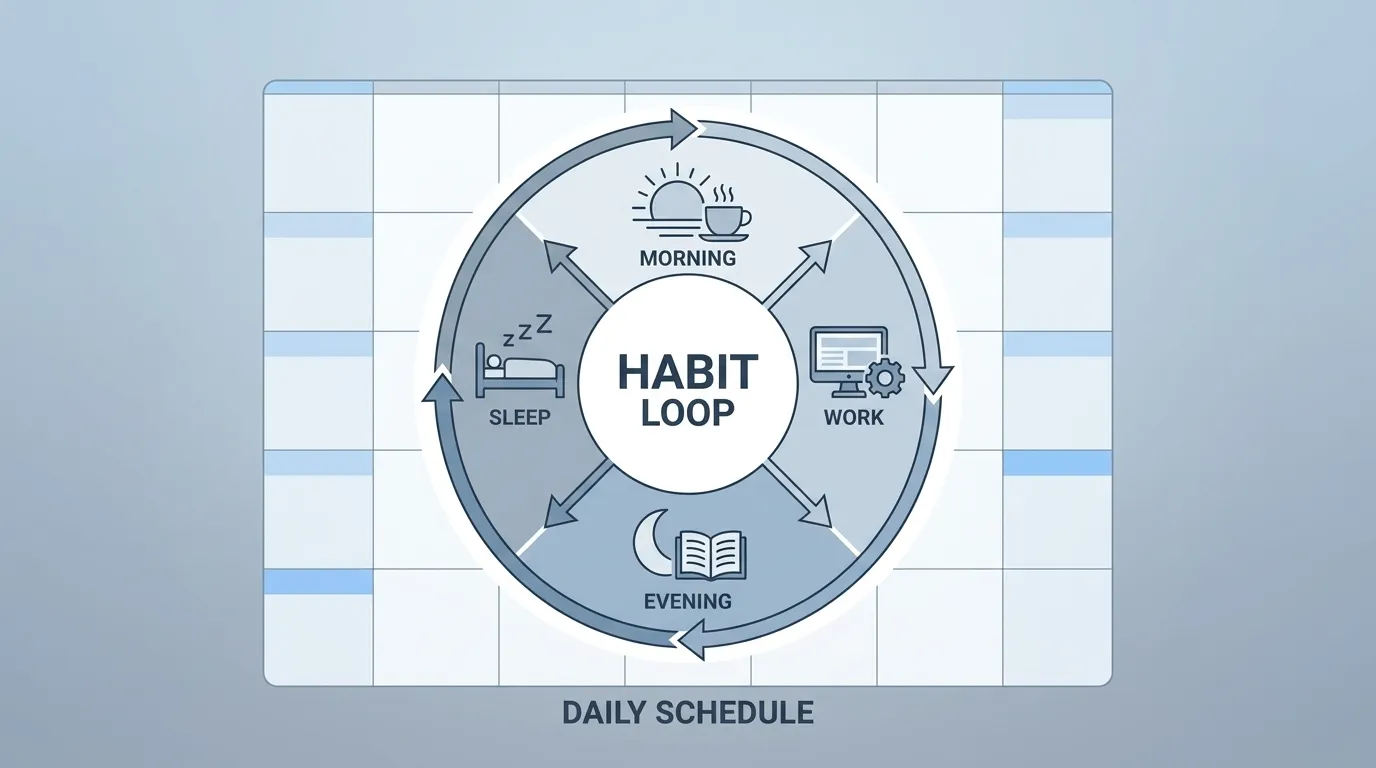
Why Most Routines Fail: The Missing Feedback Loop
Traditional routines focus on what to do but ignore how the behavior is reinforced.
Without a clear cue‑routine‑reward loop, the brain treats each action as a isolated task, making it easy to skip when motivation dips.
Habit Loop = Cue → Routine → Reward → (Craving)
If any link is weak, the loop breaks.
A system‑thinking view adds measurement and adjustment so you can spot the weak link fast.
The Habit Loop Framework: Cue, Routine, Reward, Craving
Start by mapping one keystone habit (e.g., morning exercise) onto the loop:
- Cue: Alarm + glass of water placed beside bed.
- Routine: 5‑minute stretch → 20‑minute jog.
- Reward: Refreshing smoothie + 5‑minute sunshine.
- Craving: Anticipation of the smoothie and energy boost.
Write each element on a sticky note and review it weekly. If you miss a day, ask: Which link failed? Then tweak only that link.
System Thinking: Treat Your Day as a Controlled Process
System thinking adds three layers to the habit loop:
- Stocks & Flows: Your energy, focus, and time are stocks; activities are flows that increase or decrease them.
- Feedback: Track a simple metric (e.g., minutes of deep work) each evening. The metric informs next‑day adjustments.
- Buffers: Insert 10‑minute transition blocks between meetings to prevent cumulative fatigue.
Example: If your evening stock of “mental energy” drops below a threshold, the system triggers a buffer—shutting off screens and shifting to a low‑stimulus routine (reading, light stretching).
Designing Your Personal Daily Routine System
Follow this 5‑step blueprint. Keep it to one page; simplicity beats complexity.
- Audit: List all recurring activities (work, meals, chores, leisure) for a typical week.
- Identify Keystone Habits: Pick 2‑3 habits that, when done, make other good habits easier (e.g., morning light, evening shutdown).
- Map Loops: For each keystone, write Cue → Routine → Reward → Craving.
- Add System Layers: Define energy stocks, set a single daily metric, and insert transition buffers.
- Prototype & Measure: Run the system for 3 days, record the metric each night, and adjust only the weakest link.
Use a simple table or a habit‑tracker app to log cue compliance and the chosen metric. Review every Sunday.
Measuring & Optimizing with Life Quant Metrics
Apply two core Life Quant metrics to your routine system:
- Win Rate (% days cue executed): Target ≥80 %.
- Expectancy (average reward value × win rate – cost): Keep positive; if negative, reduce routine cost or increase reward.
Calculate weekly in a spreadsheet. If win rate drops, examine the cue; if expectancy turns negative, shrink the routine or amplify the reward.
Putting It All Together: 30‑Minute Debug Session
Ready to test the system? In just 30 minutes you can:
- Identify your top 3 recurring problems (e.g., missed workouts, late‑night scrolling, low focus).
- Isolate the root cause using the habit‑loop + system‑thinking lens.
- Build a fix plan: new cue, adjusted routine, stronger reward, and a single metric to track.
Click the button above to claim your free guided session. You’ll walk away with a concrete, personalized daily‑routine system ready to implement today.