Struggling to stick to new habits because motivation fades after a few days? You’re not alone—most people rely on fleeting inspiration, only to watch their plans collapse when enthusiasm wanes. What if you could build lasting habits without needing motivation at all?
In this guide, we’ll replace the unreliable fuel of motivation with a willpower‑free system rooted in habit loops, environmental design, and tiny, repeatable actions. By the end, you’ll have a concrete framework to install any habit—whether it’s exercising, reading, or managing finances—on autopilot.

Why Motivation Fails and the Willpower‑Free Mindset
Motivation is a high‑variance emotional state. It spikes after a inspiring video or a fresh start, then drops as stress, fatigue, or distraction accumulate. Relying on it means your habits are hostage to mood.
Willpower‑Free Principle: Design habits that succeed regardless of how you feel.
Instead of fighting inertia, work with it by shaping the environment and the habit loop so the desired behavior becomes the path of least resistance.
The Myth of Motivation
- Motivation is episodic; it cannot sustain daily repetition.
- Willpower is a limited resource that depletes with use (ego depletion).
- Habits that rely on motivation collapse when the emotional tide recedes.
Understanding the Habit Loop: Cue, Routine, Reward
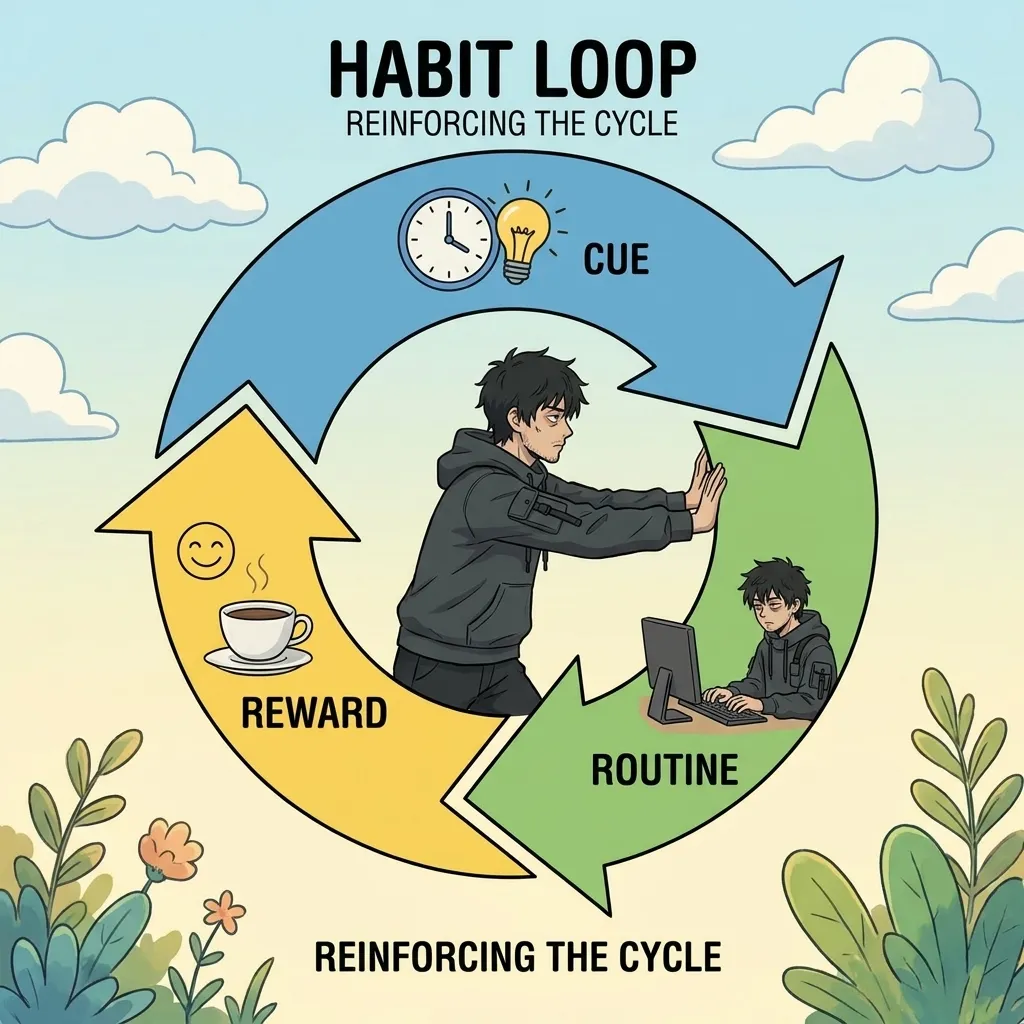
The habit loop, popularized by Charles Duhigg, consists of three elements:
- Cue: The trigger that tells your brain to start the behavior.
- Routine: The action itself—the habit you want to install.
- Reward: The positive outcome that reinforces the loop.
Willpower‑Free Loop Formula: Cue → Tiny Routine → Immediate Reward
Designing Willpower‑Free Cues
A cue must be obvious, unavoidable, and tied to an existing routine. The less you have to remember, the less willpower you need.
- Place a water bottle on your nightstand to cue morning hydration.
- Set a phone alarm labeled “Study” that goes off right after you finish lunch.
- Lay out workout clothes next to your bed the night before.
Building Your First Willpower‑Free Habit Loop
Follow this five‑step protocol to install a habit that runs on autopilot.
- Pick a Micro‑Action: Choose a version of the habit that takes ≤2 minutes (e.g., “Put on running shoes” instead of “Run 5 km”).
- Anchor to an Existing Cue: Attach the micro‑action to a reliable daily trigger (brushing teeth, coffee brewing, etc.).
- Define an Immediate Reward: Give yourself a tiny, pleasurable payoff right after the micro‑action (a sip of favorite tea, 10 seconds of a funny video, a quick stretch).
- Repeat Consistently: Perform the loop every day for at least 21 days; consistency beats intensity.
- Scale Gradually: Once the micro‑action feels automatic, increase the routine by 10‑20% while keeping the cue and reward unchanged.
Example – Reading Habit: Cue: Finish breakfast. Routine: Read one page. Reward: Enjoy a piece of dark chocolate.
Scaling and Optimizing Your Habit System
Once a habit is automatic, you can layer additional habits or refine existing ones using the same willpower‑free principles.
Tracking, Tweaking, and Automating
- Use a simple habit tracker (paper calendar or app) to mark each successful loop—visual streaks reinforce the reward pathway.
- Review weekly: If a cue fails, adjust the anchor (e.g., move the cue to a different time).
- Introduce “habit stacking”: Attach a new micro‑habit to an already‑established loop (e.g., after reading one page, do two push‑ups).
- Leverage environment design: Reduce friction for desired behaviors and increase friction for undesired ones (keep junk food out of sight, keep a book on your pillow).
Putting It All Together: Your Willpower‑Free Habit Blueprint
Here’s a concise checklist you can copy into your notes or planner:
- Identify the habit you want.
- Break it into a ≤2‑minute micro‑action.
- Choose a reliable daily cue.
- Pair the micro‑action with an immediate, enjoyable reward.
- Track daily; celebrate streaks.
- Gradually increase the routine once the loop feels effortless.
Remember: Motivation is the spark; habit loops are the engine. Build the engine first, and the spark becomes optional.
Next Steps: Debug Your Life in 30 Minutes
Ready to apply this framework to your biggest bottlenecks? A focused, 30‑minute guided session can help you pinpoint the top three problems holding you back, uncover their root causes, and craft a personalized fix plan—all without relying on motivation.
Click the button above to start your free guided session and begin building habits that work—no motivation required.