
You start a new habit with enthusiasm—exercise, reading, waking early—but after roughly two weeks the momentum fades and the habit disappears.
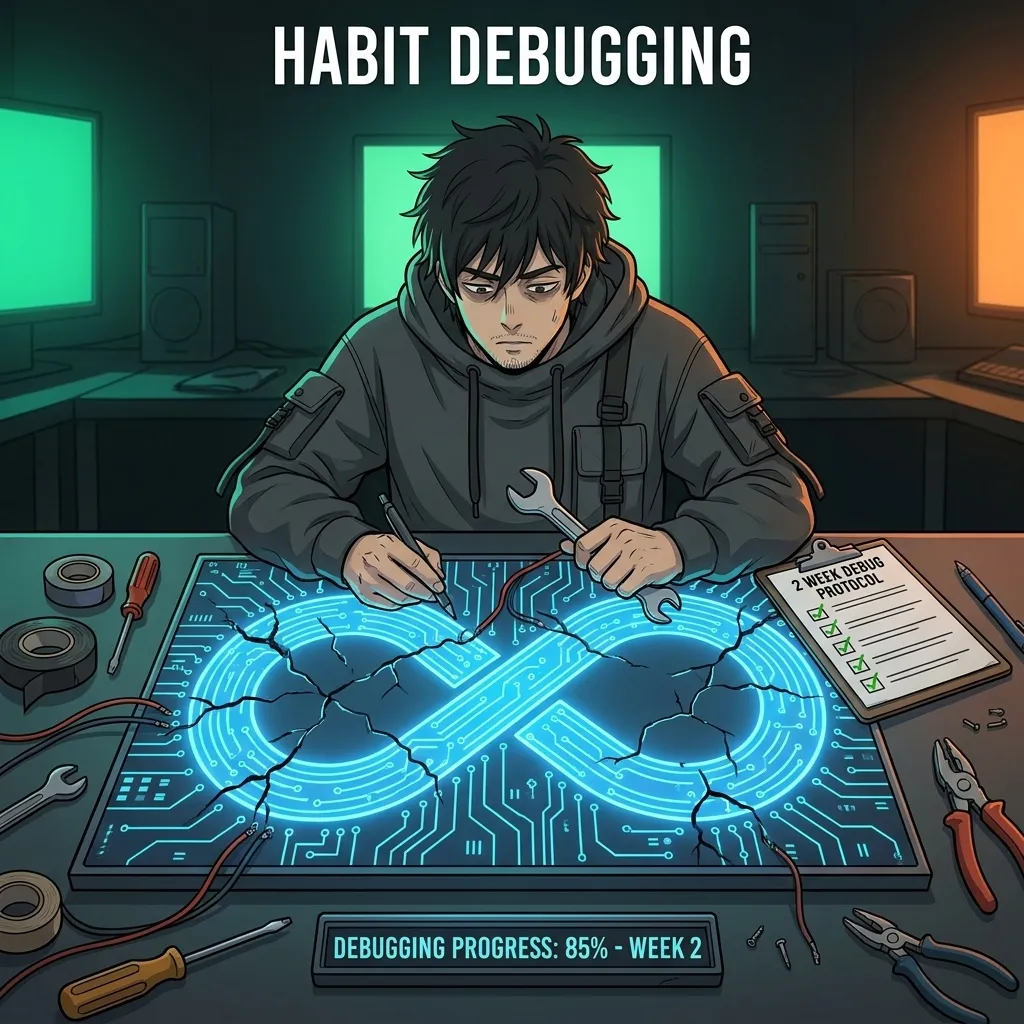
This pattern isn’t a lack of willpower; it’s a signal that your habit system needs debugging. Understanding why habits break after two weeks lets you replace fragile motivation with a reliable, self‑correcting process.
The Habit Loop Explained
Every habit follows a three‑step loop: Cue → Routine → Reward. The cue triggers the behavior, the routine is the action you perform, and the reward reinforces the loop.
- Cue – a time, location, emotion, or preceding action.
- Routine – the habit itself (e.g., putting on running shoes).
- Reward – the benefit that tells your brain the loop was worthwhile (e.g., endorphin rush, sense of accomplishment).
Why Willpower Fails After 2 Weeks
Willpower is a limited resource. When you rely on it alone, the novelty wears off, decision fatigue builds, and the cue‑routine‑reward loop weakens.
Willpower is a muscle that fatigues with repeated use.
The Hidden Feedback Gap
Without measurement, you cannot tell if the loop is still delivering the expected reward. After two weeks, subtle shifts in cue or reward go unnoticed, and the habit drifts.
- No tracking → no awareness of missed cues.
- No reward assessment → routine feels pointless.
- Environment changes (e.g., travel, workload) break the cue.
Debugging Your Habit: A 30‑Minute Protocol
Treat your habit like a buggy script: isolate the faulty line, test a fix, and redeploy.
- Identify the cue. Log the time, place, and feeling right before you intend to perform the habit for three days.
- Capture the routine. Note exactly what you did (or didn’t do) and any obstacles.
- Measure the reward. Rate satisfaction on a 1‑10 scale immediately after the routine.
- Spot the break. Look for days where cue, routine, or reward dropped below a threshold (e.g., reward < 5).
- Adjust one variable. Change the cue (set an alarm), simplify the routine (start with 2 minutes), or amplify the reward (add a favorite podcast).
- Test for 48 hours. If the loop holds, lock it in; otherwise, iterate.
Building a Fail‑Safe System
Beyond debugging, lock in durability with environmental design and habit stacking.
- Cue anchoring. Tie the habit to an existing, unbreakable routine (e.g., “After I brush my teeth, I meditate for 60 seconds”).
- Environment priming. Place running shoes by the bed, keep a book on the pillow, or set a phone wallpaper that reminds you of the cue.
- Micro‑rewards. Celebrate each completion with a tiny, immediate pleasure (a sip of flavored water, a 10‑second stretch).
- Backup plan. Define a “minimum viable version” (e.g., 2 push‑ups instead of a full workout) for days when the cue is disrupted.
Measuring Success with Life Quant Metrics
Apply the same rigor traders use to their habits. Track consistency, streaks, and recovery factor to see if your system is improving.
Consistency = (Successful Days ÷ Total Days) × 100
Watch for a rising consistency percentage and a shortening recovery time after a miss—signs your debugged habit loop is robust.
From Broken Loops to Lasting Change
Habits don’t fail because you’re weak; they fail because the system lacks diagnostics and feedback. By diagnosing the cue‑routine‑reward loop, patching the weak point, and reinforcing it with environmental cues and micro‑rewards, you turn a fleeting two‑week burst into a permanent behavior.
Ready to debug your life in just thirty minutes?
Find your top 3 problems, isolate the root cause, and build a fix plan — all in one free guided session.