
Struggling to make a new habit last beyond a few days? You’re not alone—most attempts fail because we ignore the underlying loop that drives behavior.
Understanding how habits form is the first step to rewiring them for long‑term success.
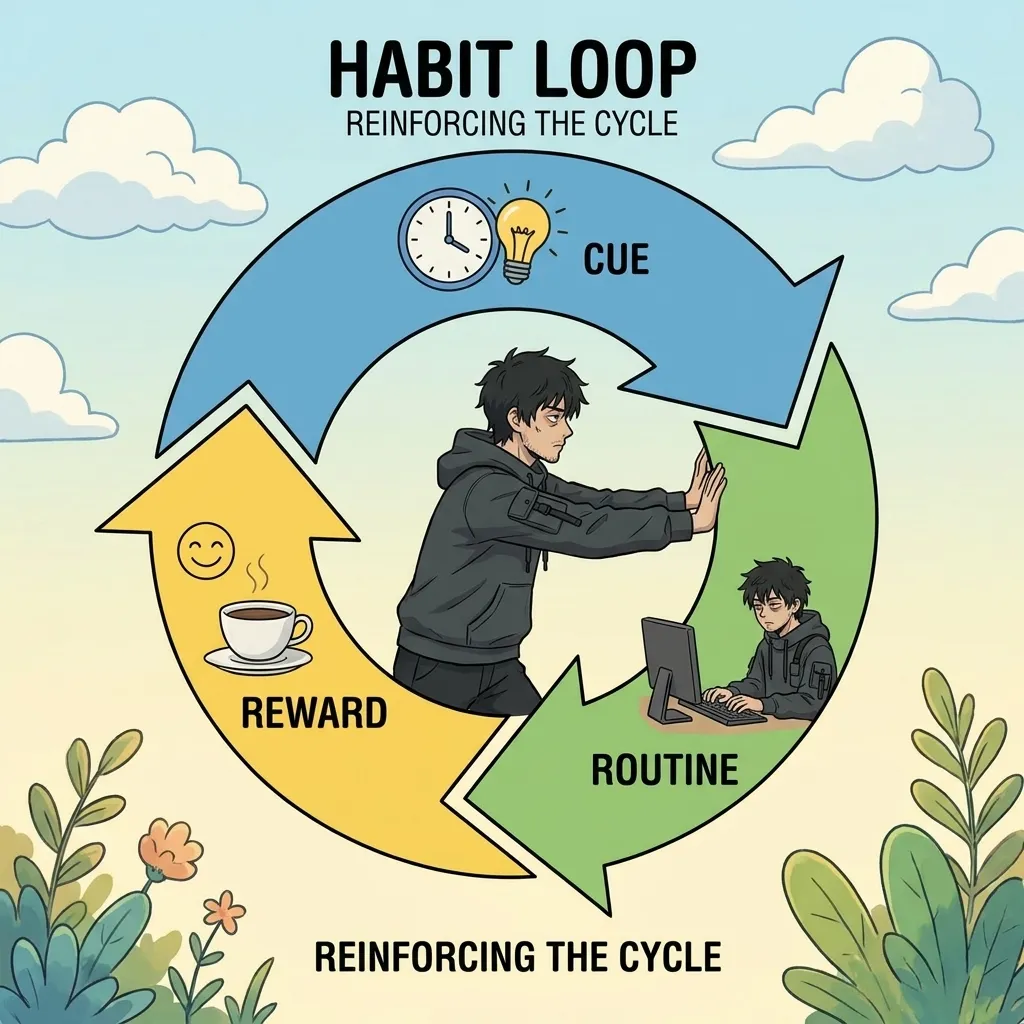
The Habit Loop Explained
Every habit follows a three‑step cycle:
Habit = Cue → Routine → Reward
- Cue: The trigger that tells your brain to go into automatic mode (time of day, location, emotion, preceding action).
- Routine: The behavior you perform—physical, mental, or emotional.
- Reward: The benefit your brain receives, which reinforces the loop for next time.
To change a habit, you keep the cue and reward, but swap the routine for a healthier alternative.
Identifying Your Current Loops
Start with an honest audit. Write down the habits you want to change and pinpoint each component.
- Spot the cue: What happens right before you act? (e.g., feeling stressed at 3 pm).
- Name the routine: What do you actually do? (e.g., reach for a sugary snack).
- Determine the reward: What craving does it satisfy? (e.g., quick energy, temporary relief).
Use a simple table for clarity:
- Cue: Feeling bored after lunch.
- Routine: Scrolling social media for 20 minutes.
- Reward: Mental distraction and novelty.
Designing New Loops that Stick
Now redesign the loop while preserving cue and reward.
- Choose a new routine: Replace scrolling with a 5‑minute walk or a quick stretch.
- Make it easy: Lay out walking shoes next to your desk; set a timer.
- Amplify the reward: Pair the walk with a favorite podcast or a refreshing glass of water.
Implementation tips:
- Start tiny: Aim for consistency, not duration. Two minutes counts.
- Use implementation intentions: “When I feel bored after lunch, I will put on my shoes and walk to the break room.”
- Stack habits: Attach the new routine to an existing solid habit (e.g., after I finish lunch, I will walk).
Tracking, Tweaking, and Scaling Your Habits
Measurement closes the feedback loop and turns intention into data‑driven improvement.
- Log daily: Mark a simple ✅ or ❌ in a habit tracker or spreadsheet.
- Review weekly: Calculate your adherence rate (e.g., 5/7 days = 71%).
- Iterate: If adherence drops below 60%, diagnose the cue or reward mismatch and adjust the routine.
Putting It All Together: From Wishful Thinking to a Repeatable System
By mapping your existing loops, deliberately swapping routines, and tracking outcomes, you convert vague motivation into a reliable, debuggable process. Each iteration sharpens your cue‑routine‑reward design, making habits not just stick, but evolve with your goals.
Ready to Debug Your Life?
Ready to diagnose your biggest habit blockers and get a personalized fix plan? Take our free 30‑minute Debug Your Life session.