
Have you ever felt stuck reading endless self‑help tips that never seem to stick?
What if you could treat your growth like a software system—debuggable, upgradable, and built on proven engineering principles?
What Is the PDES Methodology?
PDES stands for Personal Development Engineering System.
It borrows the rigor of computer science — think of it as applying partial differential equations, version control, and system architecture to your life.
“Your reality is a modular system that can be perceived, modeled, designed, and optimized.”
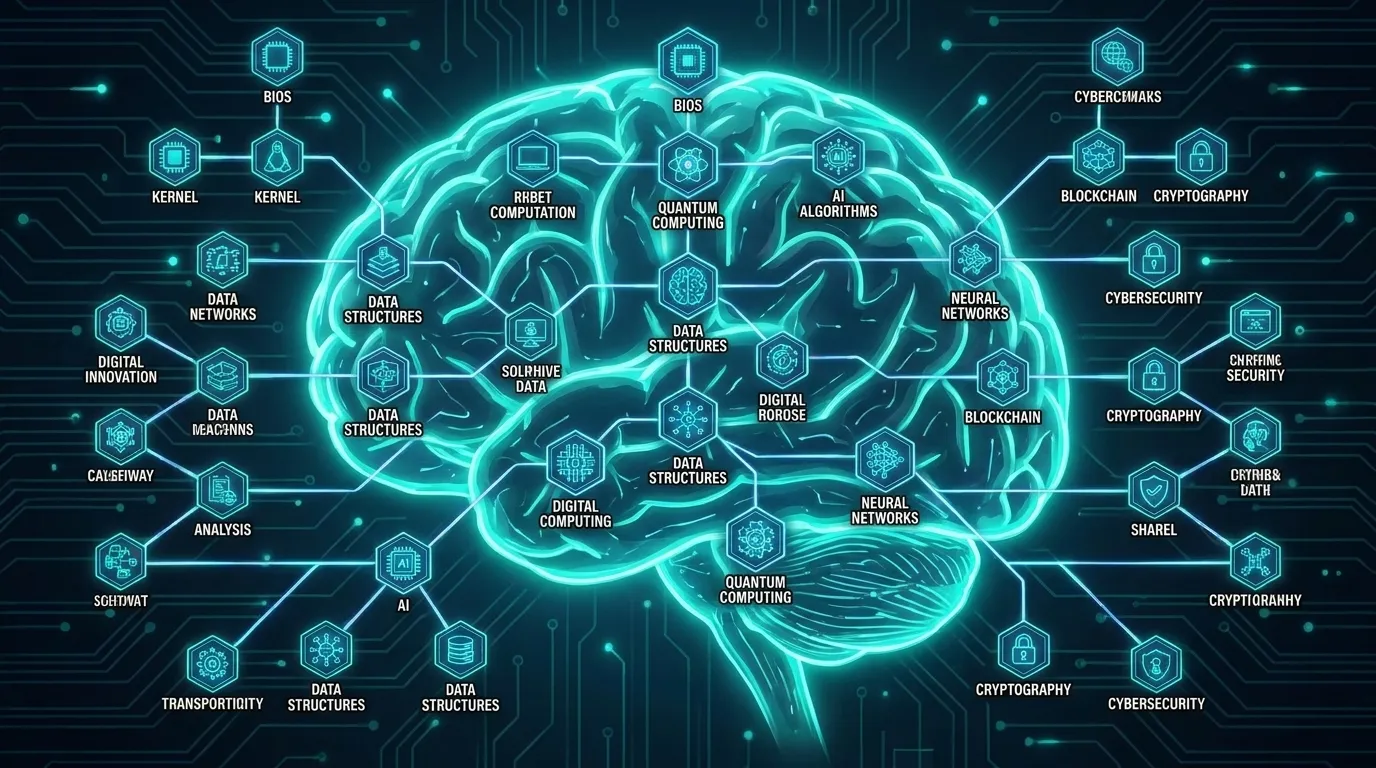
The 32‑Level Skill Tree: From BIOS to Quantum
Just as a computer boots from BIOS up to kernel and eventually quantum computing, PDES maps 32 progressive levels to human development.
Each level adds a new abstraction layer, letting you master increasingly complex challenges.
- Null → BIOS: Establish basic operating conditions (sleep, nutrition, baseline metrics).
- Syntax → Variables: Define core habits and name the metrics you will track.
- Loops → Memory: Build repeatable routines and store learning for retrieval.
- Logic → I/O: Set decision‑making rules and create feedback channels with the environment.
- Object → Inherit: Encapsulate skills into reusable modules and inherit proven patterns from mentors.
- Thread → Virtual: Run parallel projects without blocking your main process.
- Cloud → Server: Leverage external resources (courses, coaches, communities) as scalable services.
- Algorithms → DataBase: Encode proven procedures (algorithms) and store knowledge in a searchable repository.
- Low‑level → Locking: Optimize critical sections of your day and prevent race conditions (burnout).
- SuperCom → Compiler: Translate high‑level goals into low‑level actions with zero friction.
- Kernel → Root: Gain full system access—master meta‑learning and self‑modification.
- Quantum → Error → Source → Merge → Encrypt → Admin → Hidden → Anonymous → No Code: Tackle abstraction, resilience, collaboration, security, leadership, stealth, anonymity, and finally, intuitive creation without conscious syntax.
The Six‑Phase Engine: Perceive → Optimize
Every level is traversed through a universal six‑phase pipeline borrowed from software development.
- Perceive: Diagnose your current state with data collection and self‑audit.
- Model: Translate reality into a formal state machine (habits, triggers, rewards).
- Design: Create actionable frameworks—your personal SOPs and decision trees.
- Build: Generate trackers, templates, and environment scaffolding.
- Measure: Apply Life Quant metrics—win rate, drawdown, Sharpe ratio, expectancy—to every habit.
- Optimize: Debug bottlenecks, refactor habits, and automate the feedback loop.
Life Quant: Trading‑Grade Metrics for Daily Execution
PDES imports ten quantitative trading metrics to turn subjective feeling into objective KPIs.
- Win Rate: % of days you hit your core target.
- Drawdown: Longest streak of missed targets.
- Risk/Reward: Effort invested vs. outcome achieved.
- Expectancy: Average daily gain per unit of effort.
- Sharpe Ratio: Return adjusted for volatility of performance.
- Position Sizing: How much time/energy to allocate to each goal.
- Profit Factor: Gross wins divided by gross losses.
- Max Favorable: Best‑case streak you can sustain.
- Recovery Factor: Speed of bounce‑back after a setback.
- Opportunity Cost: Value of the next‑best alternative you forego.
From Theory to Artifact: Your Personal Debug Protocol
The output of PDES isn’t a vague affirmation—it’s a concrete set of artifacts you can version‑control:
- Perceive Log: Raw journal, sensor data, and self‑survey CSV.
- Model Diagram: State‑machine flowchart (Mermaid or Draw.io) showing habit loops.
- Design SOP: Step‑by‑step playbook for each level (Markdown + checklists).
- Build Tracker: Notion / Airtable base with automated reminders.
- Measure Dashboard: Live Grafana/PowerBI pane showing Life Quant KPIs.
- Optimize Script: Python/JavaScript bot that suggests habit tweaks based on deviation thresholds.
Why This Beats “Tips and Tricks”
Traditional advice is episodic. PDES is continuous integration for your life:
- Versioned: Every iteration is tagged; you can rollback.
- Testable: Hypotheses (new habits) are A/B tested with control groups.
- Scalable: Same engine works for fitness, finance, learning, or entrepreneurship.
- Transparent: Metrics are visible; no more guessing if you’re improving.
Getting Started: Your First Commit
- Run
/perceive– capture a 24‑hour baseline (sleep, steps, focus blocks). - Run
/model– draft a simple habit state machine (cue → routine → reward). - Run
/design– write a one‑page SOP for your keystone habit. - Run
/build– create a tracker in your favorite tool. - Run
/measure– log daily for a week and calculate your first Life Quant scores. - Run
/optimize– identify the lowest‑yield habit and apply a 10 % tweak.
Each cycle is a sprint. After four weeks you’ll have a release candidate version of yourself—stable, measurable, and ready for the next feature upgrade.
Take the Next Step: Grab the Debug Protocol
Ready to stop guessing and start engineering your growth? Download the full PDES Debug Protocol—complete with templates, scripts, and the 32‑level skill tree map.