You’ve bought the books, downloaded the apps, and filled your calendar with habits—yet you feel more drained than ever.
This isn’t a lack of motivation; it’s self‑improvement overwhelm. When every area of life demands optimization, the system overloads and shuts down.

The Overwhelm Trap
Self‑improvement becomes a burden when you chase dozens of goals at once. Your brain treats each new habit as an open thread, consuming mental RAM until you crash.
- Constant fatigue despite “productive” days
- Guilt when you miss a habit or skip a reading
- Jumping from one system to another without finishing any
- Feeling busier but seeing little real progress
Why Traditional Self‑Help Fails
Most advice hands you isolated tools—a new workout, a journaling prompt, a productivity hack—without showing you how they fit together. You end up with a toolbox but no instruction manual.
Self‑help gives you tools, not a system.
Without a unifying framework, each new tactic adds friction, and the overall system becomes unstable—just like patching software without a proper architecture.
The System Approach: Debug Your Life
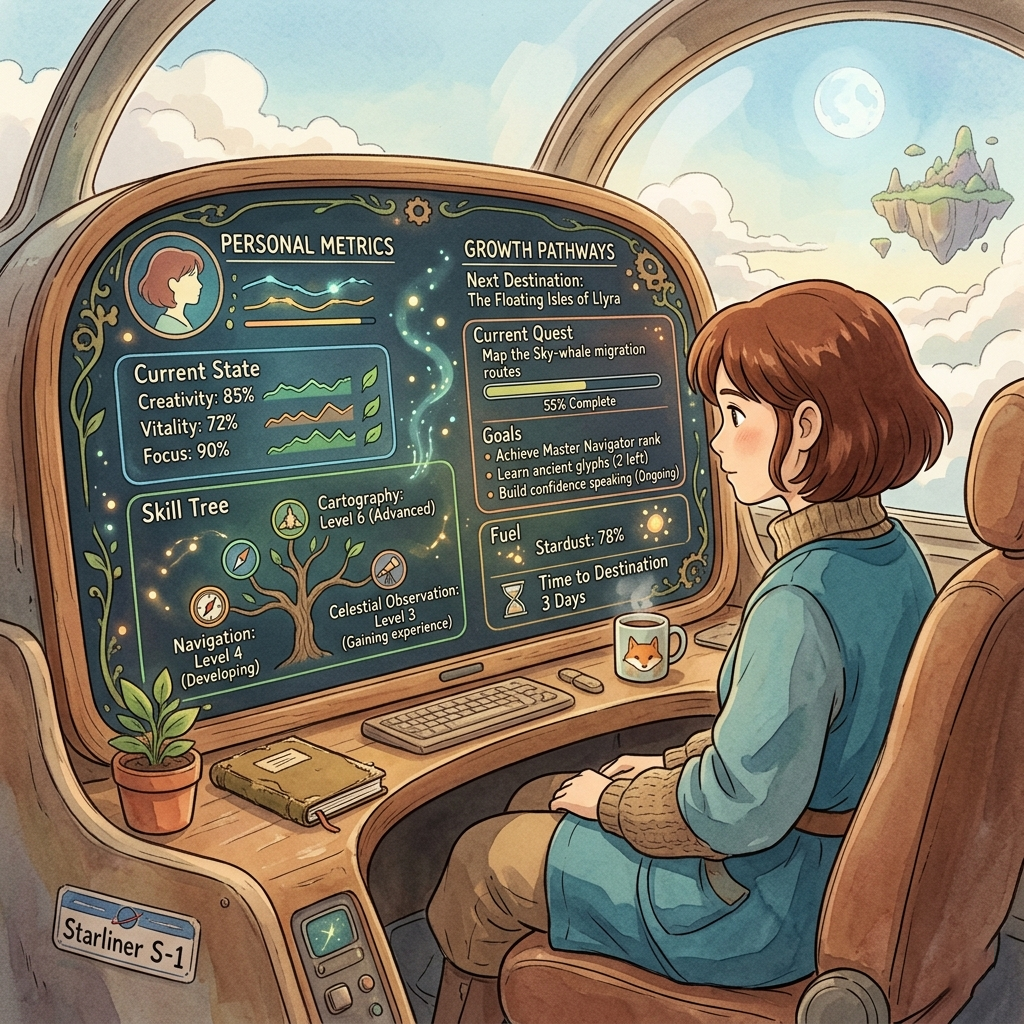
Treat your life like a codebase: perceive the current state, model it as a system, design interventions, build SOPs, measure outcomes, and optimize continuously. This six‑phase loop turns chaotic effort into reliable progress.
- Perceive – Audit habits, energy, and pain points.
- Model – Sketch a simple state‑machine of your daily flow.
- Design – Choose leverage points that give the highest ROI.
- Build – Create SOPs, trackers, and environment cues.
- Measure – Apply Life Quant metrics (win rate, expectancy, recovery factor, etc.).
- Optimize – Debug bottlenecks, refactor habits, automate the good.
Actionable Steps to Build Your Personal Protocol
Start small. Follow this checklist to create a debuggable self‑improvement system that scales with you.
- Run a 24‑hour perception log: note energy, mood, and time spent on each activity.
- Identify the top three friction points that drain >30% of your mental energy.
- Model a simple flow: “Wake → Core Work → Recovery → Sleep” and mark where friction occurs.
- Design one micro‑habit per friction point (e.g., a 2‑minute breath reset before email).
- Build a tracker (paper or app) that logs the habit and the resulting energy shift.
- After two weeks, calculate the habit’s win rate and expectancy; keep, tweak, or drop based on data.
- Iterate: add the next leverage point once the first habit is stable (>80% adherence).
Ready to Break Free?
Download the free debug protocol that maps these phases to a simple daily checklist, giving you a repeatable system instead of a fleeting motivation boost.