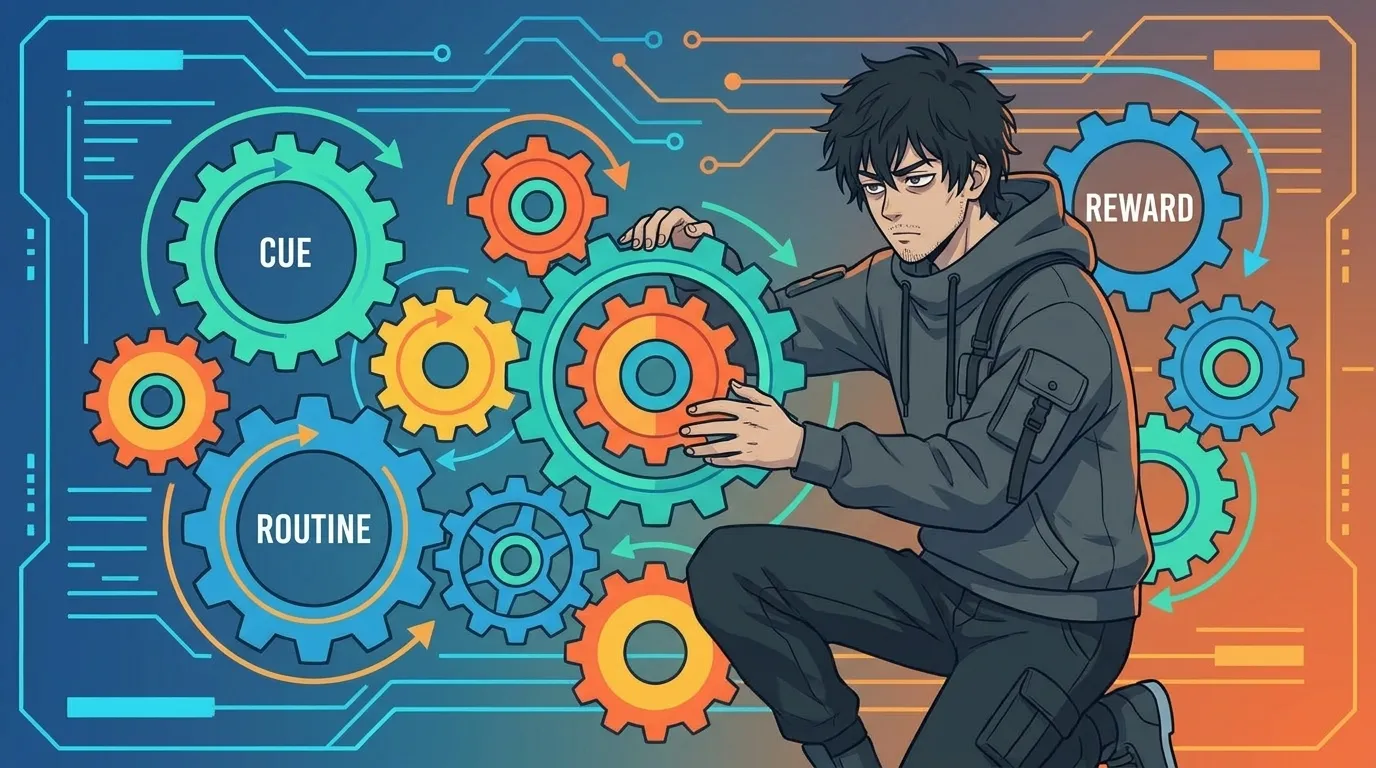
If you’ve tried self-help books, podcasts, or advice columns but still feel stuck, you’re not alone.
Millions invest time and money in “self-improvement” only to realize it’s not solving their core problem.
Why?
Because most self-help frameworks treat you as broken hardware needing a software update.
The truth? You don’t have a motivation problem. You have a system problem.
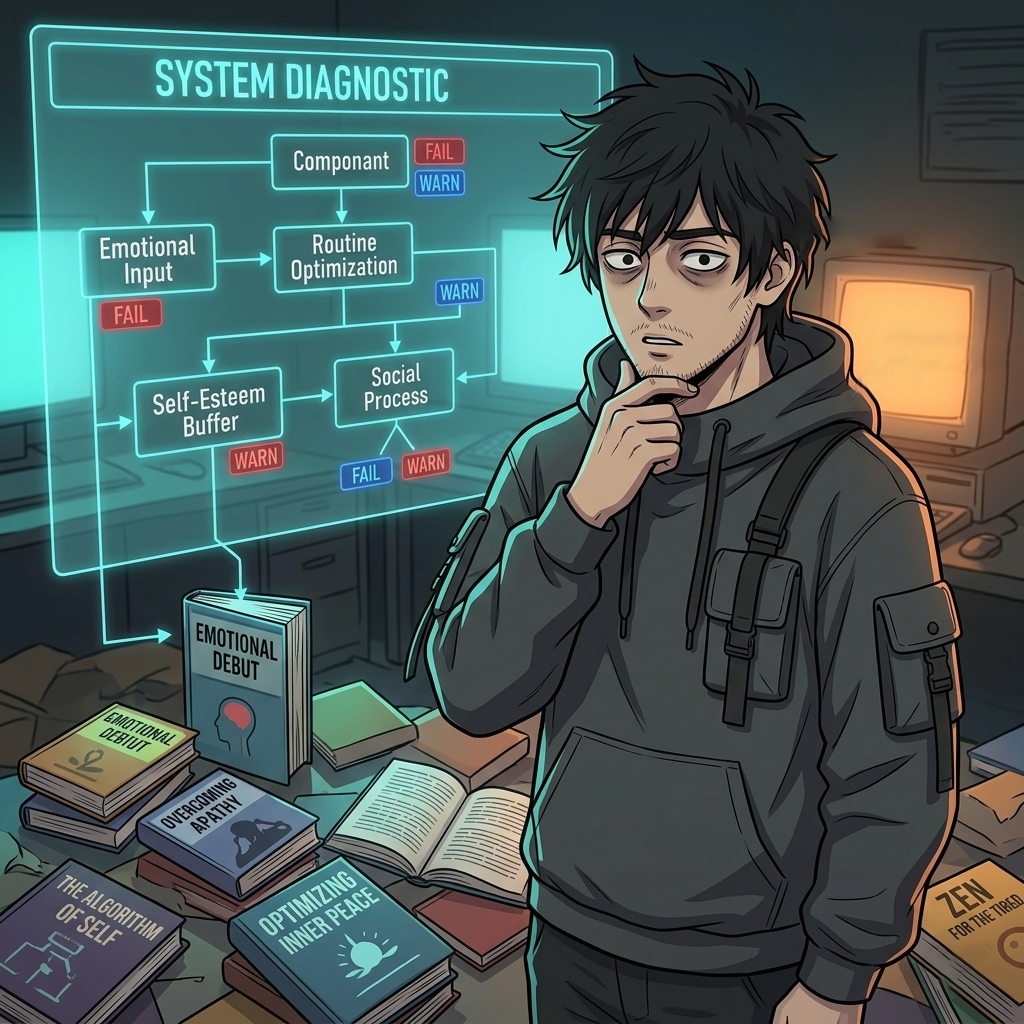
The System Gap
Self-help operates on a fundamental misconception: that humans are predictable machines that respond to linear instructions.
But personal development isn’t a spreadsheet formula.
It’s a dynamic system with feedback loops, hidden biases, and adaptive challenges.
Traditional self-help content delivers general advice without accounting for your unique conditions.
Imagine giving someone a “How to Start a Business” guide written by consultants who’ve never faced a saturated market—or a creator who never ran ads.
The 3 Core Reasons Self-Help Fails
- Outdated Models: Most frameworks use 20th-century psychology. Your reality today behaves like a 3.5 GHz processor—needs real-time debugging.
- No System Integration: Advice is like handing someone a map without teaching them how to read it. Implementation requires a loop of test-feedback-adapt.
- Passive Consumption: Reading a diet plan is fine, but losing weight requires a kitchen scale, meal prepping stack, and calorie tracker. Self-help gives ideas, not infrastructure.
Motivation ≠ Algorithm
Let’s address a myth: “You just need more willpower.”
Willpower is a resource like RAM—it overflows when the system is inefficient.
If your environment is full of friction points, your motivation will crash.
A fitness plan that requires 30 minutes of planning before each workout uses more willpower than one that automates grocery lists and preps meals.
Why Self-Help Triggers Motivational Burnout
- False Hope Loops: “One more book will change me” replaces action with consumption.
- Action Heuristics: Many self-help methods require steps that are too abstract. “Visualize success daily” works only if you already know what success looks like in your context.
- External Accountability Gap: Most systems lack real-time feedback. You can read 100 pages on time management but still procrastinate if deadlines aren’t enforced programmatically.
What Works Instead: The Debug Protocol
Shift from self-help content to self-help engineering.
This isn’t about positive affirmations—it’s about building a debuggable system that tracks your progress, surfaces blind spots, and automates adaptation.
Think of PDES as your personal operating system upgrade: metrics visualize your dopamine cycles, loops prevent decision fatigue, and variables adjust to life’s chaos.
- Real-Time Metrics: Track variables like “mood-to-productivity ratio” instead of vague goals.
- Refactorable Habits: Treat routines like software code—identify code smells (inefficiencies) and refactor them.
- Automated Triggers: Set conditional actions (e.g., “If motivation < 50%, schedule 5-minute execution sprint”).
Finally, Self-Improvement Works—When Treated as Systems Engineering
Personal development isn’t magic. It’s math.
The difference between those who succeed and those who don’t isn’t willpower or luck.
It’s the presence of a robust system that models your growth as a function of variables: time, energy, environment, and feedback.
PDES gives you that system. It doesn’t tell you “be brave.” It teaches you how to build courage algorithms that adapt to stress.
Why Self-Help Doesn’t Work — And What Does.
You don’t have a motivation problem. You have a system problem.